
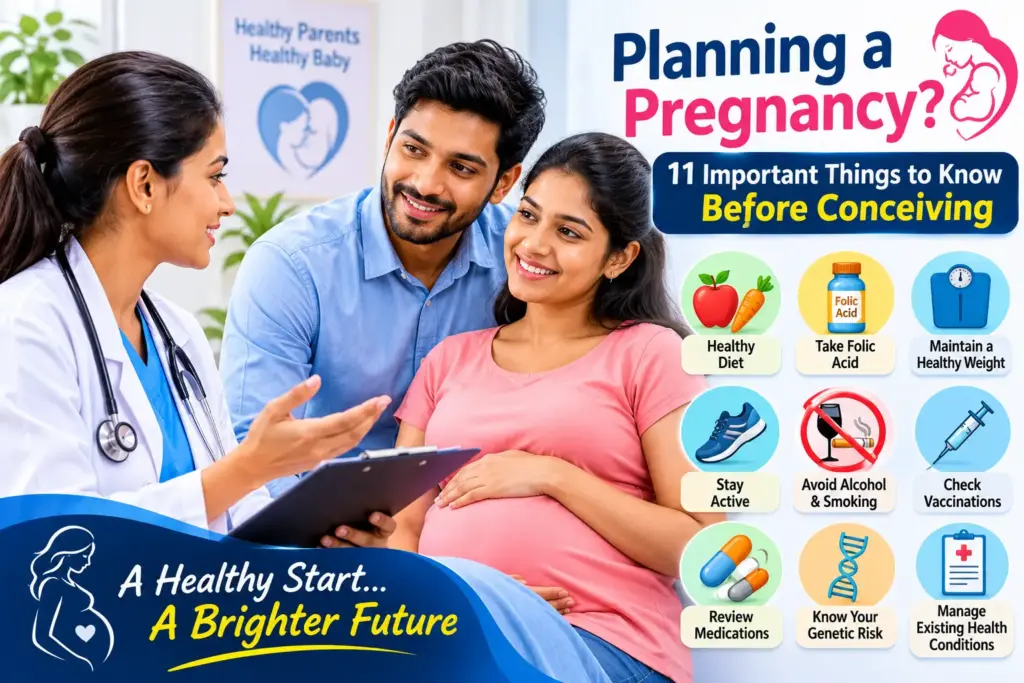
Pregnancy is one of the most important stages in life. Preparing for it in advance can make a meaningful difference to both your health and your baby’s development. Although many people begin thinking about their health only after discovering that they are pregnant, taking a few important steps beforehand can help reduce potential risks and support a healthier pregnancy.
If you are planning to have a baby, it is a good idea to arrange a pre-pregnancy appointment with a healthcare professional. This gives you an opportunity to discuss your medical history, lifestyle, medications and any health concerns before trying to conceive.
Here are some important things to consider when preparing for pregnancy.
1. Reduce Exposure to Environmental Hazards
Your home and workplace can sometimes expose you to substances that may affect reproductive health or a developing baby.
If your work involves chemicals, pesticides, industrial materials, radiation or other potentially harmful substances, discuss the possible risks with your healthcare provider and workplace safety team.
You may need to reduce or avoid exposure to certain substances while trying to conceive and during pregnancy.
Some important precautions include:
- Avoid unnecessary contact with toxic chemicals and industrial substances.
- Use appropriate protective equipment when handling cleaning products, pesticides or other chemicals.
- Follow workplace safety instructions when working around radiation or hazardous materials.
- Avoid exposure to heavy metals such as lead and mercury.
- Take care when handling materials that may contain harmful microorganisms.
Do not assume that every chemical or workplace exposure is dangerous. The level of risk depends on the substance, the amount of exposure and how long you are exposed to it. A healthcare professional or occupational health specialist can help assess your individual situation.
2. Maintain a Healthy and Balanced Diet
Good nutrition is important when preparing your body for pregnancy. A balanced diet provides the vitamins, minerals and other nutrients needed to support your health and the early development of your baby.
Try to include a variety of foods in your daily meals, such as:
- Fresh vegetables and fruits.
- Whole grains and other fibre-rich foods.
- Milk, yoghurt and other suitable dairy products, or fortified alternatives.
- Protein-rich foods such as eggs, fish, beans, lentils and lean meat.
- Healthy sources of fats, including nuts, seeds and vegetable oils.
Eating a variety of nutritious foods can help provide important nutrients such as iron, calcium, iodine, vitamin B12 and folate.
You do not need to follow an expensive or complicated diet to prepare for pregnancy. Consistency and variety are more important than relying on a few particular foods.
If you have dietary restrictions, food allergies or concerns about your nutritional intake, consider speaking with a registered dietitian.
3. Start Taking Folic Acid Before Pregnancy
Folic acid is one of the most important supplements to consider when planning a pregnancy.
It helps reduce the risk of neural tube defects, which are serious birth defects affecting the developing brain and spinal cord. These conditions include spina bifida.
The neural tube develops during the very early stages of pregnancy, often before someone realises they are pregnant. This is why starting folic acid before conception is important.
For most people planning a pregnancy, the commonly recommended amount is:
400 micrograms (mcg) of folic acid every day.
Ideally, supplementation should begin at least one month before trying to conceive and continue during early pregnancy, at least through the first 12 weeks.
Some people may need a higher dose because of particular medical conditions, medications or a previous pregnancy affected by a neural tube defect. In these situations, a healthcare professional should recommend the appropriate dose.
Do not take high-dose folic acid without medical advice.
4. Maintain a Healthy Body Weight
Your body weight can influence fertility and pregnancy outcomes. Both being overweight and being underweight may create difficulties when trying to conceive.
People living with obesity may have an increased risk of:
- Reduced fertility and difficulties becoming pregnant.
- Gestational diabetes.
- High blood pressure and pre-eclampsia.
- Pregnancy complications.
- Certain delivery complications, including an increased likelihood of needing a caesarean section.
Being significantly underweight may also affect hormone levels, menstrual cycles and ovulation, making conception more difficult.
If you are concerned about your weight, consider working with a healthcare professional or registered dietitian before trying to conceive.
A gradual, sustainable approach to improving your nutrition and physical activity is generally more helpful than crash diets or extreme weight-loss programmes.
Remember that a healthy pregnancy is not determined by body weight alone. Your overall health and individual circumstances also matter.
5. Stay Physically Active
Regular physical activity can help improve overall health, maintain a healthy weight and prepare your body for pregnancy.
If you already exercise regularly, you can generally continue doing so while trying to conceive.
If you are not physically active, consider gradually introducing activities such as:
- Walking.
- Swimming.
- Cycling.
- Light strength training.
- Gentle stretching and other suitable exercises.
Once you become pregnant, most people with uncomplicated pregnancies can continue regular physical activity. However, the type and intensity of exercise may need to be adjusted according to individual health and medical advice.
Avoid pushing your body beyond its limits, particularly if you are not accustomed to strenuous exercise.
It is also advisable to avoid activities that may cause excessive overheating during pregnancy. Saunas and hot tubs, especially those that raise your body temperature significantly, are best avoided during pregnancy.
If you have a medical condition or are unsure which exercises are suitable, speak with your healthcare provider before starting a new routine.
6. Avoid Alcohol, Smoking and Recreational Drugs
Alcohol, tobacco and recreational drugs can negatively affect reproductive health and pregnancy outcomes.
Smoking exposes the body to harmful chemicals and is associated with problems such as reduced fertility, pregnancy complications, premature birth and low birth weight.
Alcohol consumption during pregnancy can affect the baby’s development and cause fetal alcohol spectrum disorders.
Some recreational drugs can also interfere with fetal growth and development.
If you are planning a pregnancy, it is best to stop drinking alcohol, smoking and using recreational drugs before trying to conceive.
If you find it difficult to stop, do not hesitate to seek professional support. Healthcare providers can help you access appropriate treatment and support programmes.
Avoiding second-hand smoke is also important.
7. Review Your Medications Before Pregnancy
If you regularly take prescription medicines, over-the-counter medications, herbal products or dietary supplements, discuss them with your healthcare provider before trying to conceive.
Some medicines are safe to continue during pregnancy, while others may need to be changed or replaced.
This is particularly important if you take medication for conditions such as epilepsy, high blood pressure, diabetes, mental health conditions or autoimmune diseases.
However, do not suddenly stop taking prescribed medication simply because you are planning a pregnancy. Stopping certain medicines without medical guidance can be harmful to your health and may create additional risks during pregnancy.
Your doctor can review your current treatment and help you make any necessary changes safely.
8. Manage Existing Medical Conditions
If you have a long-term health condition, it is important to discuss pregnancy planning with your healthcare provider before trying to conceive.
Conditions that may require additional attention include:
- Diabetes.
- High blood pressure.
- Heart disease.
- Kidney disease.
- Thyroid disorders.
- Epilepsy.
- Asthma.
- Autoimmune conditions.
For example, poorly controlled diabetes during early pregnancy can increase the risk of certain birth defects and other complications.
Similarly, uncontrolled high blood pressure may increase the risk of pregnancy-related complications.
With appropriate planning, treatment adjustments and regular medical monitoring, many people with long-term health conditions can have healthy pregnancies.
The goal is to ensure that your condition is as well controlled as possible before conception.
9. Check Your Vaccination Status and Protect Against Infections
Certain infections can affect pregnancy and the development of the unborn baby. Some infections are particularly concerning when they occur during early pregnancy.
Rubella and chickenpox (varicella), for example, can cause serious complications if someone who is not immune becomes infected during pregnancy.
Vaccines are available to protect against these infections.
If you are planning a pregnancy, ask your healthcare provider to review your vaccination history and determine whether you need any additional vaccines.
The rubella and chickenpox vaccines are live vaccines and are generally not given during pregnancy. If you need either vaccine, you should receive it before becoming pregnant and follow the recommended waiting period.
For these vaccines, the commonly recommended interval is at least one month after the relevant vaccination before trying to conceive. If you need two doses of the chickenpox vaccine, allow enough time to complete the recommended schedule.
Hepatitis B vaccination may also be recommended for people who are at risk of infection or who have not previously been vaccinated.
Other vaccines may be recommended depending on your medical history, country and local vaccination guidelines.
Do not assume that every vaccine should be given before pregnancy or that the same vaccination schedule applies to everyone. A healthcare professional can help you decide which vaccines are appropriate.
10. Understand How Age Can Affect Fertility and Pregnancy
Age is another important factor to consider when planning a family.
As a woman gets older, fertility generally decreases. The number and quality of eggs decline over time, which can make it more difficult to become pregnant.
The risk of certain pregnancy complications also increases with age, including:
- Miscarriage.
- Chromosomal abnormalities in the baby.
- Gestational diabetes.
- High blood pressure and pre-eclampsia.
- Certain pregnancy and delivery complications.
The decline in fertility becomes more noticeable during the mid-to-late 30s, although the rate of change varies between individuals.
However, being 35 or older does not mean that you cannot have a healthy pregnancy. Many people have healthy babies after this age.
If you are planning to become pregnant later in life, discussing your reproductive health with a healthcare professional can help you understand your options and any additional monitoring that may be appropriate.
There is no single age by which everyone must complete their family. Decisions about pregnancy should consider individual health, fertility, personal circumstances and family goals.
11. Consider Genetic Counselling and Inherited Conditions
Some medical conditions can be passed from parents to their children through genes.
If you or your partner have a family history of inherited diseases, or if you have previously had a child affected by a genetic condition, it may be helpful to seek genetic counselling before planning another pregnancy.
One example is thalassaemia, an inherited blood disorder that affects the body’s ability to produce normal haemoglobin.
If both partners carry certain forms of thalassaemia-related genes, there may be a risk of having a child with a serious form of the disease.
Carrier screening and other appropriate blood tests can help identify whether either partner carries certain inherited conditions.
These tests may be particularly relevant in populations where specific inherited blood disorders are more common. However, genetic conditions are not limited to particular countries or communities.
Depending on your family history and background, a healthcare professional may recommend:
- Blood tests for thalassaemia and other inherited blood disorders.
- Carrier screening for selected genetic conditions.
- Genetic counselling to understand possible risks.
- Further testing if a previous pregnancy or child was affected by an inherited condition.
If you have concerns about inherited diseases, it is better to discuss them before conception, when you have more time to understand the available options.
Final Thoughts
Preparing for pregnancy involves more than simply deciding to have a baby. It is an opportunity to review your health, improve your lifestyle and address potential medical concerns before conception.
Eating a balanced diet, taking folic acid, maintaining a healthy weight, staying physically active, avoiding harmful substances and reviewing your medications are all important steps.
If you have a long-term medical condition, concerns about fertility or a family history of inherited diseases, consider speaking with a healthcare professional before trying to conceive.
A little preparation before pregnancy can make a meaningful difference to your health and your baby’s future.
Medical Disclaimer
This article is intended for general educational purposes and should not replace professional medical advice, diagnosis or treatment. Pregnancy planning recommendations may vary depending on your age, medical history, medications and country. Always consult a qualified healthcare professional before starting supplements, changing medications or receiving vaccinations when planning a pregnancy.
Comments