
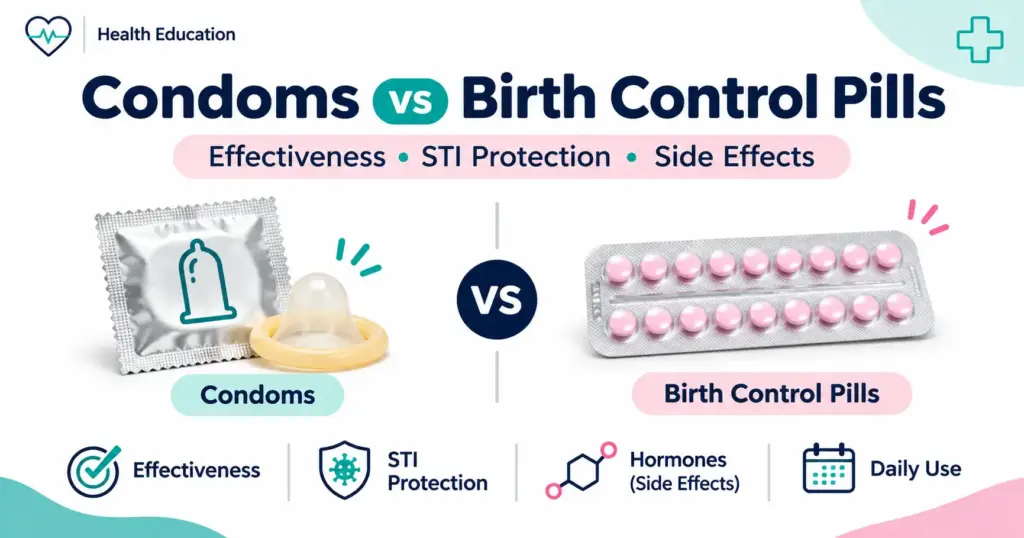
Choosing the right birth control method is an important part of family planning. Today, several options are available to help prevent unintended pregnancy, but condoms and birth control pills remain two of the most widely used methods.
Both can be effective when used correctly, but they work in different ways.
One common question is whether birth control pills cause weight gain. Another is whether condoms provide enough protection against pregnancy.
If you’re trying to decide between condoms vs birth control pills, understanding their benefits, disadvantages and effectiveness can help you make the right choice for your lifestyle.
What Are Condoms?
Condoms are a type of birth control known as a barrier method.
They work by creating a physical barrier that helps prevent sperm from entering the vagina and reaching an egg.
Condoms are widely available and do not contain hormones.
Advantages of Condoms
1. Protection Against Sexually Transmitted Infections
One of the biggest advantages of condoms is that they help reduce the risk of sexually transmitted infections (STIs), including HIV, syphilis and gonorrhea.
Unlike birth control pills, condoms provide protection against both pregnancy and many STIs.
However, condoms do not completely eliminate the risk of infection.
2. Easy to Buy and Use
Condoms are generally available without a prescription.
You can usually buy them at pharmacies, supermarkets and other retail stores.
3. No Hormonal Side Effects
Condoms do not contain hormones, so they do not affect the body’s natural hormone levels or cause hormonal side effects.
4. Only Needed During Sex
Unlike birth control pills, condoms do not need to be used every day.
They are only needed during sexual activity and should be used correctly every time.
Disadvantages of Condoms
1. Correct Use Is Important
Condoms must be used correctly during every sexual encounter.
Incorrect or inconsistent use can reduce their effectiveness in preventing pregnancy.
2. Risk of Breaking or Slipping
Condoms can sometimes break or slip off, particularly when they are not used correctly.
If this happens, there may be a risk of unintended pregnancy.
What Are Birth Control Pills?
Birth control pills, also called oral contraceptive pills, are a hormonal method of preventing pregnancy.
There are two main types: combined pills containing estrogen and progestin, and progestin-only pills.
These hormones help prevent pregnancy, mainly by stopping ovulation or affecting other processes involved in conception.
Birth control pills are taken regularly rather than only during sexual activity.
Advantages of Birth Control Pills
1. Highly Effective at Preventing Pregnancy
Birth control pills are more than 99% effective when used perfectly.
However, their effectiveness is lower with typical use because people may occasionally forget or delay taking a pill.
Taking your pills correctly and consistently is important for reliable pregnancy protection.
2. Can Help Regulate Menstrual Periods
Some birth control pills, particularly combined pills, can help make menstrual periods more regular.
They may also reduce painful menstrual cramps, a condition known as dysmenorrhea.
This can be helpful for women who experience irregular or painful periods.
3. Do Not Interrupt Sexual Activity
Birth control pills do not require preparation immediately before sex.
Once you are using them correctly and they have become effective, they provide ongoing pregnancy protection without interrupting sexual activity.
Disadvantages of Birth Control Pills
1. Must Be Taken Regularly
Birth control pills need to be taken according to their instructions.
Forgetting one or more pills can increase the chance of pregnancy.
Some progestin-only pills require particularly strict timing, while others allow a longer window for a late dose.
2. No Protection Against STIs
Birth control pills do not protect against sexually transmitted infections, including HIV, syphilis and gonorrhea.
Condoms are still important if you need STI protection.
3. Possible Side Effects
Some women may experience mild side effects when they first start taking birth control pills.
These can include:
- Headaches.
- Nausea.
- Breast tenderness.
- Changes in menstrual bleeding.
- Concerns about changes in body weight.
Although weight gain is sometimes reported, research has not shown that combined birth control pills directly cause significant weight gain.
Side effects can vary depending on the type of pill and the person using it.
4. Medical Advice May Be Needed
Not every birth control pill is suitable for everyone.
A doctor or qualified healthcare professional can help determine whether a particular pill is appropriate based on your medical history and overall health.
Prescription requirements also vary by country and pill type.
Condoms vs Birth Control Pills: A Simple Comparison
Both condoms and birth control pills can help prevent unintended pregnancy, but they have different benefits and limitations.
| Factor | Condoms | Birth Control Pills |
|---|---|---|
| Pregnancy prevention (typical use) | About 87% effective | About 93% effective |
| Pregnancy prevention (perfect use) | About 98% effective | More than 99% effective |
| STI protection | Yes, reduces the risk of many STIs | No STI protection |
| Contains hormones | No | Yes |
| How to use | During every sexual encounter | Taken regularly, usually daily |
| Availability | Usually available without a prescription | Depends on the country and pill type |
Effectiveness figures are approximate first-year estimates based on US contraceptive guidance. Estimates may differ slightly between countries and healthcare sources.
Which Birth Control Method Is Right for You?
Both condoms and birth control pills are effective methods of preventing unintended pregnancy when used correctly.
The best choice depends on your lifestyle, health condition and personal preferences.
If protection against sexually transmitted infections is your main concern, condoms are an important option because birth control pills do not provide STI protection.
If you want reliable ongoing pregnancy prevention and help managing irregular or painful periods, birth control pills may be suitable.
Some people also choose to use condoms and birth control pills together for additional pregnancy protection while reducing the risk of STIs.
Before choosing a method, consider how easily you can use it consistently and whether it suits your health needs.
Final Thoughts
There is no single birth control method that is best for everyone.
Condoms offer a hormone-free option that also helps protect against sexually transmitted infections. Birth control pills provide highly effective pregnancy prevention and may offer additional menstrual health benefits.
Understanding the advantages and disadvantages of both methods can help you make an informed choice.
If you’re unsure which method is right for you, speak to a qualified healthcare professional for personalised advice.
Medical Disclaimer: This article is for general educational purposes only. It does not replace professional medical advice, diagnosis or treatment.
Comments