
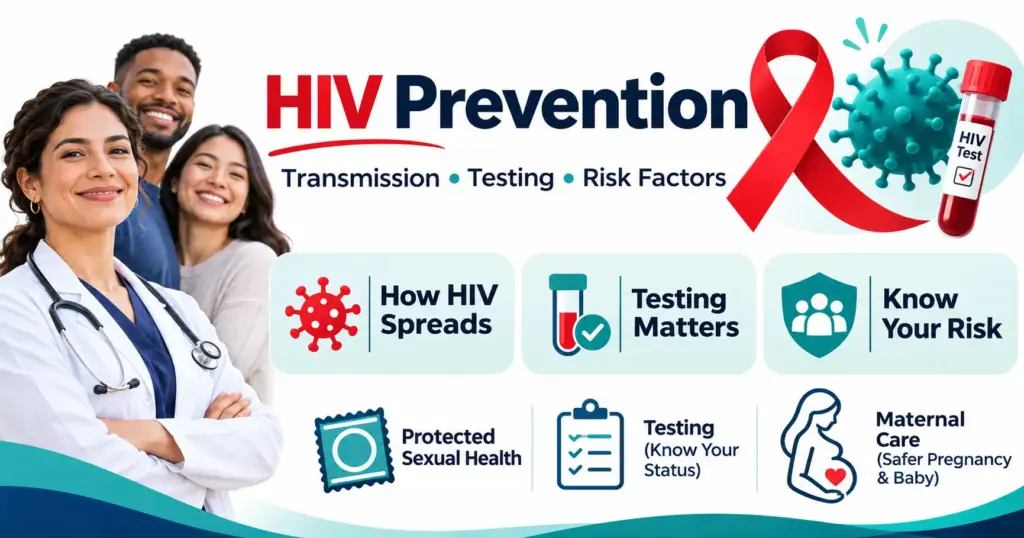
HIV is a serious health condition, but many people living with the virus may look and feel completely healthy for years without knowing they have it.
This is why understanding how HIV spreads, how it can be detected and who may be at risk is so important.
Learning the facts about HIV and AIDS can help you protect your health and make informed decisions.
What Is HIV?
HIV stands for Human Immunodeficiency Virus.
It is a virus that attacks the body’s immune system, making it harder to fight infections and certain diseases.
After HIV enters the body, a person may continue to look and feel healthy for a long time. Some people do not experience noticeable symptoms and may not realise they have been infected.
Because of this, HIV cannot be identified simply by looking at someone.
HIV testing is the only reliable way to find out whether a person has HIV.
What Is AIDS?
AIDS stands for Acquired Immunodeficiency Syndrome.
It is the most advanced stage of HIV infection.
When HIV is left untreated, it can gradually weaken the immune system. As the body’s ability to fight infections decreases, a person may develop serious illnesses.
Without appropriate medical treatment, AIDS can become life-threatening.
However, having HIV does not automatically mean a person has AIDS. Modern HIV treatment can control the virus and prevent or delay the progression to AIDS.
How Is HIV Transmitted?
HIV can spread when certain body fluids from a person with HIV enter another person’s body.
The main ways HIV can be transmitted include:
1. Unprotected Sexual Contact
HIV can be transmitted through vaginal or anal sex without appropriate protection when the virus is not effectively suppressed by treatment.
Sexual contact is one of the main ways HIV spreads.
2. Contact With Infected Blood
HIV can spread when blood containing the virus enters another person’s bloodstream.
Sharing needles, syringes or other sharp instruments contaminated with infected blood can increase the risk of transmission.
3. Mother-to-Child Transmission
HIV can also pass from a mother living with HIV to her baby.
Transmission can occur:
- During pregnancy.
- During childbirth.
- Through breastfeeding.
However, appropriate HIV treatment and medical care can greatly reduce the risk of transmission.
Can You Recognise Someone With HIV by Their Appearance?
No. A person living with HIV may appear completely healthy.
You cannot determine whether someone has HIV based on their appearance or symptoms alone.
The only reliable way to know your HIV status is through appropriate testing.
HIV tests commonly use blood samples, although some screening tests can also use oral fluid.
If you think you may have been exposed to HIV, seek medical advice about testing. The timing of a test matters because HIV may not be detectable immediately after exposure.
Preventing Mother-to-Child HIV Transmission
HIV testing during pregnancy plays an important role in protecting the health of both mother and baby.
In countries such as the United States, Canada, New Zealand and Australia, HIV screening is commonly offered as part of antenatal or prenatal healthcare.
Testing helps healthcare professionals identify HIV early and recommend suitable treatment.
With proper medical care and HIV treatment during pregnancy, the risk of passing HIV to the baby can be greatly reduced.
Pregnant women should discuss HIV screening and any concerns about possible exposure with their healthcare provider.
How Is HIV Not Transmitted?
There are several common misunderstandings about how HIV spreads.
HIV is not transmitted through ordinary everyday contact with someone living with the virus.
You cannot get HIV from:
- Mosquito bites.
- Hugging or ordinary kissing.
- Shaking hands or touching someone.
- Sharing toilets.
- Sharing cups, plates or eating utensils.
- Caring for someone living with HIV during normal daily activities.
HIV does not spread through casual social contact.
Understanding these facts is important because people living with HIV should not face unnecessary fear, rejection or discrimination.
Are You at Risk of HIV Infection?
Certain situations may increase the possibility of HIV exposure.
Consider the following questions:
- Have you had sexual contact with multiple partners?
- Do you think your sexual partner may have sexual relationships with other people?
- Have you had sex without using condoms, particularly with partners whose HIV status you do not know?
- Have you ever been diagnosed with a sexually transmitted infection (STI)?
If any of these situations apply to you, consider discussing HIV testing with a qualified healthcare professional.
Having multiple sexual partners or an STI does not mean you have HIV. Your actual risk depends on the type of exposure and the prevention measures used.
Final Thoughts
HIV is a serious infection, but understanding how it spreads and knowing your HIV status can help protect your health.
A person living with HIV may not show visible symptoms, which is why testing is important.
HIV can spread through certain sexual exposures, infected blood and from mother to child during pregnancy, childbirth or breastfeeding. However, it does not spread through everyday contact such as hugging, shaking hands or sharing utensils.
Learning about HIV, recognising possible risks and getting tested when appropriate are important steps in protecting your health.
Medical Disclaimer: This article is intended for general health education only. It does not replace professional medical advice, diagnosis or treatment. Consult a qualified healthcare professional for personalised advice about HIV testing, prevention and treatment.
Comments