
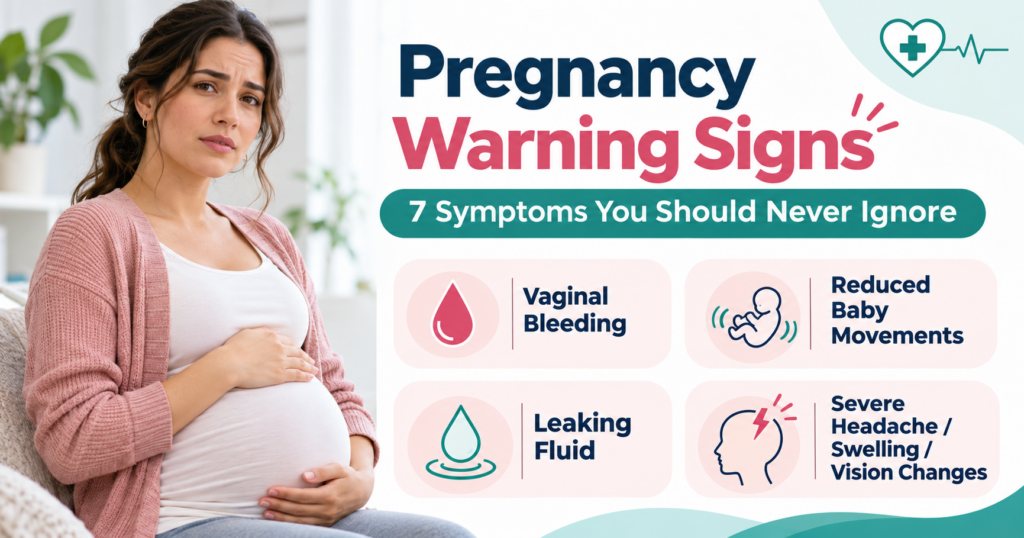
Pregnancy brings many changes to your body. While some discomfort is normal, certain symptoms may be warning signs of a serious problem.
Some expectant mothers worry about even minor aches and pains, while others ignore symptoms that need immediate medical attention.
Knowing the pregnancy warning signs can help you recognise when something isn’t right and when you should contact your doctor or midwife.
Here are seven important warning signs during pregnancy that should not be ignored.
1. Vaginal Bleeding During Pregnancy
Vaginal bleeding during pregnancy can happen for different reasons, depending on how far along you are.
Bleeding During the First Trimester
Bleeding accompanied by abdominal pain during the first three months of pregnancy may be a sign of an ectopic pregnancy.
An ectopic pregnancy occurs when a fertilised egg implants outside the uterus.
It is important to remember that an ectopic pregnancy does not always cause vaginal bleeding.
Bleeding During the Second Trimester
Bleeding towards the end of the first trimester or during the second trimester may sometimes be associated with a miscarriage or another pregnancy complication.
Bleeding During the Third Trimester
Bleeding during the final three months of pregnancy may be caused by problems involving the placenta.
These include:
- Placenta previa: When the placenta lies unusually low in the uterus.
- Placental abruption: When the placenta separates from the uterine wall before delivery.
There are several other possible causes of bleeding during pregnancy.
If you experience vaginal bleeding at any stage of pregnancy, seek medical advice promptly. Heavy bleeding or bleeding with severe pain requires emergency medical attention.
2. Severe Nausea and Vomiting
Nausea and vomiting are common during pregnancy, especially in the early months.
However, vomiting becomes a concern when it is so severe that you cannot drink enough fluids or keep food and water down.
Severe vomiting can lead to dehydration and may require medical treatment.
Your doctor may also need to check whether an underlying medical condition is causing the symptoms.
If you are vomiting repeatedly and cannot keep fluids down, contact your healthcare provider as soon as possible.
3. Reduced Baby Movements
Your baby’s movements are an important sign of their well being, particularly during the later stages of pregnancy.
As your pregnancy progresses, you will usually become familiar with your baby’s normal movement pattern.
If you suddenly notice that your baby is moving less than usual, moving differently or has stopped moving, it could be a warning sign that your baby needs medical attention.
Contact your midwife, maternity unit or doctor immediately if you notice reduced or absent baby movements.
Do not wait until the next day or rely on drinking something cold, eating or changing positions to make your baby move.
A healthcare professional can check your baby’s well-being and decide whether further monitoring is needed.
4. Regular or Painful Contractions
During pregnancy, you may sometimes feel your abdomen becoming tight.
This happens when the muscles of the uterus contract.
There are two main types of contractions.
False Labour Contractions
False labour contractions, also known as Braxton Hicks contractions, can happen before real labour begins.
These contractions are usually irregular and do not become progressively stronger or more frequent.
They are generally a normal part of pregnancy.
True Labour Contractions
True labour contractions usually follow a more regular pattern.
As labour progresses:
- Contractions become more frequent.
- The time between contractions becomes shorter.
- Contractions usually become stronger and more painful.
The timing of contractions can vary from person to person.
While false labour contractions are generally normal, regular or painful contractions before your expected delivery date may indicate premature labour.
If you think you may be going into labour too early, seek medical attention promptly.
5. Leaking Watery Fluid From the Vagina
If you suddenly notice a gush of clear, watery fluid running down your legs, it may be amniotic fluid.
Amniotic fluid is the liquid that surrounds your baby inside the womb.
Sometimes, it can be difficult to tell the difference between leaking amniotic fluid and urine.
If watery fluid continues to leak even after you have emptied your bladder, it may indicate that your waters have broken.
If you notice a sudden gush or continuous trickle of fluid, contact your maternity care provider immediately, even if you are unsure whether it is urine or amniotic fluid.
6. Severe Headache, Abdominal Pain, Vision Changes and Swelling
A severe headache, abdominal pain, changes in vision or sudden swelling can sometimes be signs of a serious pregnancy condition called preeclampsia.
Preeclampsia is associated with high blood pressure during pregnancy and can affect both the mother and baby.
Important warning signs include:
- Severe or persistent headache.
- Upper abdominal pain.
- Blurred vision or other visual changes.
- Sudden swelling, particularly around the face and hands.
Preeclampsia can become life-threatening if it is not recognised and treated.
If you experience these symptoms, seek urgent medical attention.
7. Fever During Pregnancy
A fever during pregnancy should not be ignored, especially when it is high or accompanied by other symptoms.
During the first three months of pregnancy, certain infections may affect the developing baby.
In the later stages of pregnancy, a serious infection or high fever may also create risks for both mother and baby.
Paracetamol, also known as acetaminophen, may be used to manage fever when appropriate and according to medical advice.
However, taking medication to reduce a fever should not delay medical assessment.
If you develop a fever during pregnancy, contact your healthcare provider promptly.
Final Thoughts
Not every ache or discomfort during pregnancy means something is wrong. However, some symptoms need immediate medical attention.
Vaginal bleeding, severe vomiting, reduced baby movements, regular contractions before term, leaking fluid, severe headaches, vision changes, sudden swelling and fever are important pregnancy warning signs.
Recognising these symptoms and seeking medical care without delay can help protect both you and your baby.
If something feels unusual or you are concerned about your pregnancy, don’t ignore it. Speak to your doctor or midwife.
Medical Disclaimer: This article is intended for general health education only. It does not replace professional medical advice, diagnosis or treatment. If you experience an urgent pregnancy warning sign, seek medical attention immediately.
Comments