
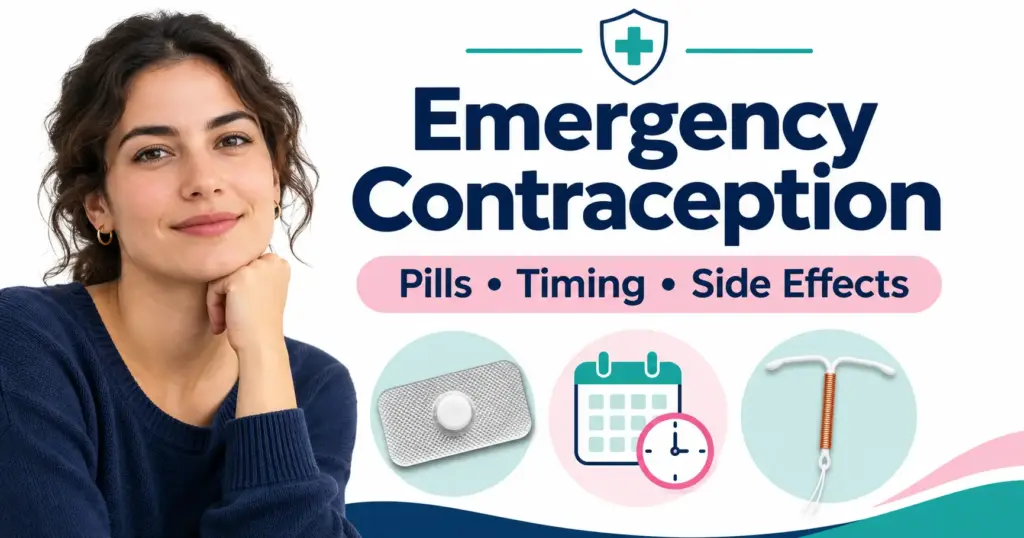
Unprotected sex or a problem with your usual birth control can sometimes lead to an unexpected pregnancy. If this happens, emergency contraception may help reduce the chance of becoming pregnant.
There are two main emergency contraception options: emergency contraceptive pills, commonly called the morning-after pill, and a copper intrauterine device (IUD).
Both methods are used after unprotected sex or contraceptive failure, but they work differently.
Understanding when and how to use emergency contraception can help you make an informed decision.
1. What Are Emergency Contraceptive Pills?
Emergency contraceptive pills are medicines used to help prevent pregnancy after unprotected sex or when a birth control method fails.
One commonly used type contains levonorgestrel, a synthetic hormone similar to progesterone.
Levonorgestrel emergency contraception may be available as:
- Two tablets containing 0.75 mg each.
- One tablet containing 1.5 mg.
Another type of emergency contraceptive pill contains ulipristal acetate, which is available in some countries.
Emergency contraceptive pills mainly work by delaying or preventing ovulation, which is the release of an egg from the ovary.
Important: Emergency contraceptive pills are intended as a backup method rather than a replacement for regular birth control.
2. Who Can Use Emergency Contraceptive Pills?
Emergency contraceptive pills may be suitable in situations where pregnancy is possible and contraception was not used or did not work as intended.
Common examples include:
- Having sex without using any birth control method.
- A condom breaking, slipping off or being used incorrectly during sex.
- Experiencing sexual assault or rape.
Emergency contraceptive pills help reduce the chance of pregnancy by preventing or delaying ovulation.
They work before a pregnancy is established and do not end an existing pregnancy.
3. How to Take Emergency Contraceptive Pills
Emergency contraceptive pills should be taken as soon as possible after unprotected sex.
The recommended time depends on the type of pill.
Levonorgestrel Emergency Contraceptive Pill
Levonorgestrel is most effective when taken as soon as possible, ideally within 72 hours (3 days) after unprotected sex.
It may still provide some benefit up to 5 days after sex, but its effectiveness decreases over time.
Ulipristal Acetate Emergency Contraceptive Pill
Ulipristal acetate can be used within 120 hours (5 days) after unprotected sex.
It may be more effective than levonorgestrel when more time has passed.
However, availability differs between countries.
What If You Vomit After Taking the Pill?
Vomiting shortly after taking emergency contraception may prevent the medicine from working properly.
If you vomit within 2 hours of taking levonorgestrel or within 3 hours of taking ulipristal acetate, contact a pharmacist or healthcare professional promptly. You may need another dose.
How Effective Are Emergency Contraceptive Pills?
Emergency contraceptive pills can significantly reduce the chance of pregnancy, but they are not 100% effective.
Their effectiveness depends on several factors, including how soon they are taken and the type of medication used.
A copper IUD is the most effective emergency contraception option when inserted within the recommended time.
Emergency contraceptive pills can be used again if needed, but a regular contraception method is usually more reliable for ongoing pregnancy prevention.
Possible Side Effects
Emergency contraceptive pills may cause temporary side effects, including:
- Nausea.
- Headache.
- Dizziness.
- Breast tenderness.
- Changes in the timing or pattern of your menstrual period.
These side effects are usually mild and improve within a few days.
4. Important Things to Know Before Using Emergency Contraception
There are several important things to remember when taking emergency contraceptive pills.
Taking the Pill With Food
You can take emergency contraceptive pills with or without food.
Eating something beforehand may help if you are concerned about nausea, but taking the pill on an empty stomach does not normally prevent it from working.
Protection After Taking Emergency Contraception
Emergency contraceptive pills do not provide ongoing protection against pregnancy from unprotected sex that happens afterwards.
If you have sex again, you may need another form of contraception.
What If You Become Pregnant After Taking the Pill?
If emergency contraception does not prevent pregnancy, available evidence does not suggest that taking the pill causes harm to the developing baby.
Does Emergency Contraception Cause an Abortion?
No. Emergency contraceptive pills do not cause an abortion.
They work by preventing or delaying ovulation and cannot end an established pregnancy.
Changes to Your Next Period
Your next period may arrive around its usual time, a few days earlier or a few days later.
If your period is more than a week late, take a pregnancy test or seek medical advice.
You should also consider a pregnancy test if you have not had a period or bleeding within three weeks after using emergency contraception.
Copper IUD as Emergency Contraception
Another emergency contraception option is the copper intrauterine device (IUD), sometimes called the copper coil.
A trained healthcare professional inserts this small device into the uterus.
A copper IUD can be used as emergency contraception, usually within 5 days after unprotected sex.
It is more than 99% effective when used within the recommended time and can also provide ongoing contraception.
You do not need to have had children to be eligible for a copper IUD. A healthcare professional can advise whether it is suitable for you.
5. Where Can You Get Emergency Contraception?
Emergency contraception is available through several healthcare services, although access and prescription requirements vary between countries.
Depending on where you live, you may be able to obtain it from:
- Pharmacies: Some emergency contraceptive pills are available without a prescription, while others require one.
- Public healthcare clinics: Community health services may provide emergency contraception and family planning advice.
- Sexual and reproductive health clinics: These services can provide information about emergency contraception and ongoing birth control.
- Family planning clinics: Both public and private clinics may offer contraceptive advice and treatment.
- Community health programmes: Some local health services and non-governmental organisations provide reproductive healthcare.
- Private hospitals and medical centres: Doctors and other qualified healthcare professionals can advise on suitable options.
Emergency contraception is available through different healthcare systems in countries such as the United States, Canada, New Zealand, Australia and the United Kingdom.
However, the types of pills available, whether a prescription is required and the cost may vary.
If you need emergency contraception, speak to a pharmacist, doctor, nurse or sexual health professional as soon as possible.
A healthcare professional can also help you choose a suitable regular birth control method for the future.
Final Thoughts
Emergency contraception provides an important way to reduce the chance of pregnancy after unprotected sex or contraceptive failure.
Emergency contraceptive pills work best when taken as soon as possible, while the copper IUD is the most effective emergency contraception option.
Although emergency contraception is useful when needed, regular contraception is generally a better choice for ongoing pregnancy prevention.
If you are unsure which option is right for you, seek advice from a qualified healthcare professional.
Medical Disclaimer: This article is intended for general health education only and does not replace professional medical advice, diagnosis or treatment. Emergency contraception availability and recommendations may vary depending on your location and medical circumstances.
Comments