
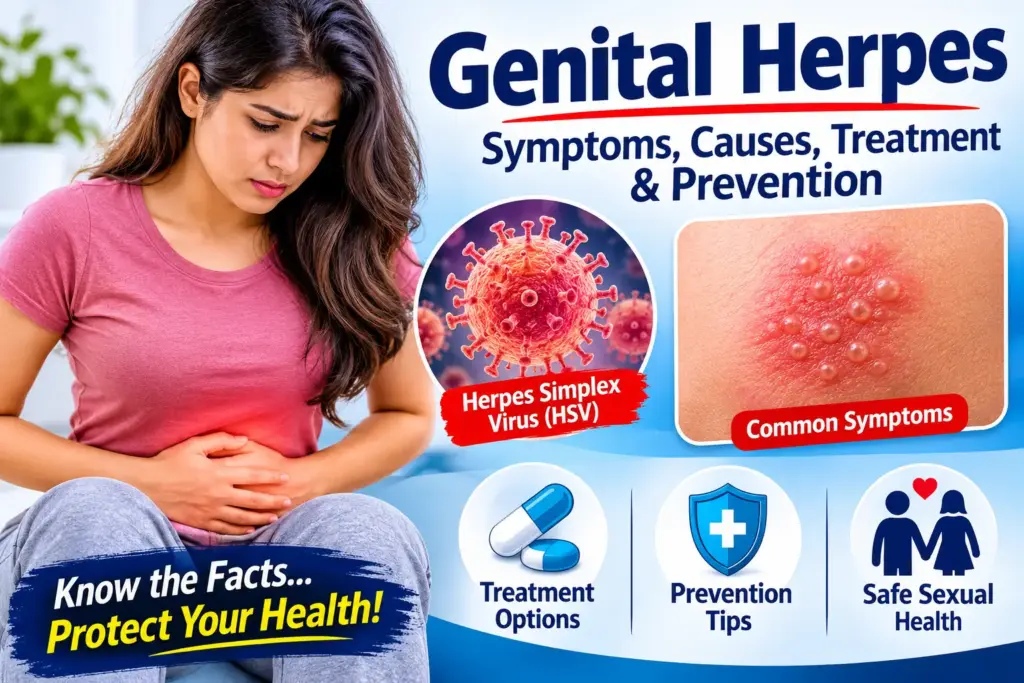
Understanding Herpes Simplex Virus and Its Long-Term Effects on Sexual Health
Genital herpes is a common sexually transmitted infection (STI) that affects people across the world. Despite being a widespread condition, many people still have limited knowledge about how it spreads, what symptoms to look for and how it affects the body over time.
The infection is caused by the herpes simplex virus (HSV). Although genital herpes cannot currently be completely cured, available antiviral treatments can help manage symptoms, reduce outbreaks and lower the risk of transmission.
Understanding this condition is important for protecting sexual health, making informed decisions and reducing the stigma often associated with sexually transmitted infections.
What Causes Genital Herpes?
Genital herpes is caused by the herpes simplex virus, which has two main types:
- Herpes Simplex Virus Type 1 (HSV-1): Commonly associated with oral herpes, which causes cold sores around the mouth. However, HSV-1 can also cause genital herpes through oral sexual contact.
- Herpes Simplex Virus Type 2 (HSV-2): Commonly associated with genital herpes and is a frequent cause of recurring genital infections.
The infection is mainly transmitted through direct skin-to-skin contact during vaginal, anal or oral sexual activity with someone who carries the virus.
It is also important to understand that transmission can occur even when an infected person does not have visible blisters or sores.
Common Symptoms of Genital Herpes
Symptoms of genital herpes can vary from person to person. Some individuals experience noticeable symptoms, while others may have very mild symptoms or no symptoms at all.
When symptoms do occur, the first outbreak may develop within a few days after infection, commonly around 2–12 days. However, symptoms may also remain unnoticed for much longer.
Some common signs include:
1. Small Blisters Around the Genital Area
One of the most recognisable symptoms is the appearance of small, fluid-filled blisters around the genitals, anus or nearby skin. They may appear individually or in clusters.
2. Painful Open Sores
The blisters may break open and develop into small, painful ulcers or sores. These can cause considerable discomfort and may take several days or longer to heal.
3. Itching, Burning or Tingling
Some people experience itching, irritation, burning or tingling around the affected area before blisters appear.
4. Discomfort During Urination
If sores develop close to the urinary opening, passing urine may become painful or uncomfortable.
5. Flu-Like Symptoms
During the first outbreak, some people may also experience fever, body aches, headaches and swollen lymph nodes.
It is worth remembering that not everyone with genital herpes develops visible symptoms. This is one reason why the infection can spread without people knowing they have it.
Does Genital Herpes Stay in the Body Permanently?
One of the most important things to understand about genital herpes is that the virus remains in the body after the initial infection.
After entering the body, the herpes simplex virus travels to nearby sensory nerve cells, where it can remain inactive or dormant for long periods.
At certain times, the virus can become active again and cause another outbreak. This is known as a recurrent herpes infection.
Some people may experience several outbreaks, while others may have very few or none that they recognise. Recurrent outbreaks often become less frequent or less severe over time, although this varies between individuals.
Even when there are no visible symptoms, the virus can sometimes become active on the skin and be transmitted to a sexual partner.
Can Genital Herpes Be Completely Cured?
Currently, there is no permanent cure that removes the herpes simplex virus from the body.
However, this does not mean that people with genital herpes cannot manage the condition or maintain a healthy lifestyle.
Antiviral medicines are commonly used to control the infection. Medicines such as acyclovir, valacyclovir and famciclovir can help:
- Reduce the severity and duration of outbreaks.
- Help painful sores heal more quickly.
- Reduce the frequency of recurrent outbreaks.
- Lower the risk of transmitting the virus to sexual partners when used as prescribed.
Treatment may be recommended during an outbreak or as daily suppressive therapy for people who experience frequent recurrences or need additional help reducing transmission risk.
Although antiviral medicines are effective at managing the infection, they do not eliminate the dormant virus from the body.
Anyone experiencing possible symptoms should consult a qualified healthcare professional for proper assessment, testing and treatment.
How Can Genital Herpes Be Prevented?
Although there is currently no guaranteed way to prevent every genital herpes infection, certain precautions can help reduce the risk of transmission.
- Use condoms consistently during sexual activity. They reduce the risk but cannot provide complete protection because the virus can affect skin areas not covered by a condom.
- Avoid sexual contact when you or your partner have visible blisters, sores or warning symptoms such as tingling and burning.
- Discuss sexual health and STI testing openly with your partner.
- Seek medical advice if you notice unusual blisters, sores or other genital symptoms.
- Follow medical advice and prescribed antiviral treatment when necessary.
It is also important to remember that genital herpes can be transmitted even without visible symptoms.
Living With Genital Herpes
A genital herpes diagnosis can sometimes cause emotional stress, embarrassment or anxiety, particularly because of the stigma surrounding sexually transmitted infections.
However, having genital herpes does not define a person’s character, relationships or quality of life.
Many people around the world live with HSV and continue to have healthy relationships and normal daily lives. With appropriate medical guidance, treatment and open communication, the condition can be managed effectively.
People diagnosed with genital herpes should also be aware that the infection may have additional implications during pregnancy. Anyone who is pregnant or planning a pregnancy should discuss their HSV history with a healthcare professional.
Final Thoughts
Genital herpes is a lifelong viral infection, but it is a manageable health condition. Recognising its symptoms, understanding how it spreads and knowing the available treatment options are important steps towards better sexual and reproductive health.
There is no reason to judge or discriminate against someone because of an STI diagnosis. Accurate information, responsible healthcare and open conversations can help reduce the stigma surrounding genital herpes.
Sexual health education should be accessible to everyone, regardless of their location, age or background.
Remember: Early medical advice, accurate information and responsible sexual health practices can make a meaningful difference in managing genital herpes.
Comments