
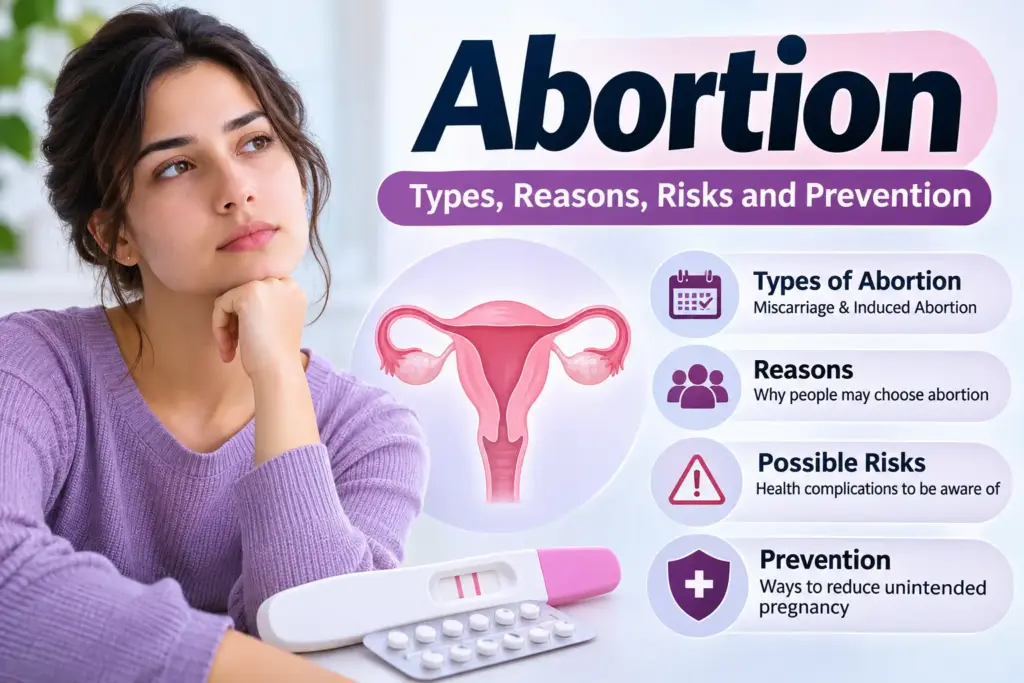
Abortion is a topic that many people have questions about, especially when it comes to pregnancy, reproductive health and possible complications.
A pregnancy may end naturally through a miscarriage, or it may be ended intentionally through an induced abortion. Although these are different situations, both are important subjects in reproductive healthcare.
Understanding the types of abortion, the reasons behind them and the possible health risks can help people make informed decisions and recognise when medical care is needed.
What Is Abortion?
Abortion refers to the ending of a pregnancy.
In medical terminology, the word has traditionally been used to describe both spontaneous pregnancy loss and the intentional termination of a pregnancy.
The original definition of abortion in some older educational materials refers to pregnancy ending before 28 weeks. However, the medical definitions and pregnancy-week limits used for miscarriage vary between countries.
Today, healthcare professionals commonly use the term miscarriage for spontaneous pregnancy loss and induced abortion when a pregnancy is intentionally ended.
Types of Abortion
Abortion is generally discussed in two main categories:
- Spontaneous abortion (miscarriage).
- Induced abortion.
1. Spontaneous Abortion (Miscarriage)
A spontaneous abortion, commonly called a miscarriage, happens when a pregnancy ends naturally without an intentional medical procedure.
Miscarriage is relatively common, particularly during early pregnancy.
Some estimates suggest that 20% to 30% of pregnancies may end in loss, depending on how pregnancies are counted. Among clinically recognised pregnancies, estimates are generally lower.
A miscarriage can occur for several reasons, and in many cases, the exact cause may not be known.
2. Induced Abortion
An induced abortion is the intentional termination of a pregnancy through medical or surgical methods.
The original classification discussed here divides induced abortion into therapeutic abortion and abortion performed outside the law.
Therapeutic Abortion
Therapeutic abortion refers to an abortion performed for medical reasons, such as when continuing a pregnancy poses a serious threat to the pregnant person’s life or health.
In some legal systems, particularly under older legal frameworks, approval from medical specialists was required before carrying out the procedure in a hospital.
For example, the original Sri Lankan educational context described certification by two gynaecologists when a pregnancy threatened the mother’s life.
However, medical requirements and abortion laws differ between countries, and this is not a universal rule.
Abortion Outside Legal Requirements
The original classification also uses the term criminal abortion for an induced abortion performed outside the circumstances permitted by law.
In Sri Lanka, abortion has historically been subject to strict legal restrictions under the Penal Code.
However, abortion laws are not the same everywhere.
In countries such as the United States, Canada, New Zealand, Australia and the United Kingdom, the legal framework and requirements can differ significantly.
It is important to understand the laws and healthcare regulations that apply in your own location.
Common Reasons for Seeking an Abortion
People may consider an induced abortion for several personal, medical or social reasons.
The circumstances mentioned in the original educational material include:
- Limited sexual health knowledge: A lack of understanding about reproductive health and pregnancy prevention.
- Romantic relationships: Unplanned pregnancies that may occur within personal relationships.
- Sexual assault or rape: Pregnancy resulting from sexual violence.
- Incest: Pregnancy resulting from sexual activity or abuse involving close family members.
- Workplace violence or coercion: Circumstances involving abuse, exploitation or pressure in a working environment.
- Socioeconomic difficulties: Financial problems and challenges related to supporting a child.
- Social and cultural concerns: Family expectations, social pressure and cultural circumstances.
- Contraceptive failure: Pregnancy that occurs despite using a family planning method.
Every person’s situation is different, and the reasons for considering an abortion may involve several factors.
Possible Complications of Abortion
Abortion-related health risks depend on the method used, the stage of pregnancy, the person’s health and whether appropriate medical care is available.
An abortion carried out using recommended medical methods is generally safe. However, unsafe procedures and untreated complications can cause serious health problems.
Possible complications include:
1. Heavy Bleeding
Excessive bleeding can occur as a complication of abortion.
Severe or uncontrolled bleeding requires urgent medical attention.
2. Infection
Unsafe procedures, contaminated instruments or untreated complications may lead to infections.
In severe cases, an infection can spread and become life-threatening.
3. Injury to Internal Organs
Unsafe surgical procedures may cause damage to the uterus or surrounding organs.
Serious injuries can require further medical treatment.
4. Fertility Problems
Severe, untreated infections or damage to reproductive organs can sometimes affect future fertility.
However, an uncomplicated abortion performed with appropriate medical care does not usually affect a person’s ability to become pregnant in the future.
5. Long-Term Pelvic Pain
Some people may experience persistent lower abdominal or pelvic pain following certain complications.
Ongoing pain should always be assessed by a healthcare professional.
6. Long-Term Infections
If an infection is not properly treated, it may lead to further reproductive health problems.
Early diagnosis and appropriate treatment are important.
7. Effects on Family Relationships
Pregnancy-related decisions and experiences can sometimes affect personal relationships and family life.
The emotional and social impact varies from person to person and may depend on individual circumstances and available support.
How Can Unintended Pregnancy Be Prevented?
One of the most important ways to reduce the need for an induced abortion is to improve access to reproductive health education and effective contraception.
The following steps can help reduce unintended pregnancies.
Learn About Reproductive Health
Accurate reproductive and sexual health education helps people understand pregnancy, contraception and responsible decision-making.
Avoid Unprotected Sex
Using appropriate protection during sexual activity can reduce the risk of unintended pregnancy.
Use Reliable Contraception
Family planning methods can help individuals and couples prevent pregnancies they are not planning.
Choosing a suitable contraceptive method is an important part of reproductive healthcare.
Use Contraception Consistently
Using the chosen family planning method correctly and consistently improves its effectiveness.
Understand Emergency Contraception
Emergency contraceptive pills can help prevent pregnancy after unprotected sex or contraceptive failure.
Emergency contraception works to prevent pregnancy. It does not end an established pregnancy and is different from medication used for an induced abortion.
Seek Professional Medical Advice
Healthcare professionals can provide information about reproductive health, contraception and appropriate healthcare options.
Consider Counselling
Counselling can help people understand their circumstances, discuss concerns and make informed decisions about reproductive health.
These measures are intended to reduce unintended pregnancy. They cannot prevent every miscarriage, which may occur for reasons outside a person’s control.
Final Thoughts
Abortion and miscarriage are important reproductive health topics that deserve accurate information and medical understanding.
A miscarriage happens naturally, while an induced abortion is an intentional medical process.
Although abortion can involve risks, serious complications are uncommon when appropriate, evidence-based healthcare is available. Unsafe procedures can result in significant health problems.
Reproductive health education, reliable contraception, emergency contraception and professional counselling can help people make informed decisions and reduce unintended pregnancies.
If you have concerns about pregnancy, miscarriage or abortion, seek advice from a qualified healthcare professional.
Medical Disclaimer: This article is for general educational purposes only. It does not replace professional medical advice, diagnosis or treatment. Abortion laws and healthcare requirements vary by country and region.
Comments