
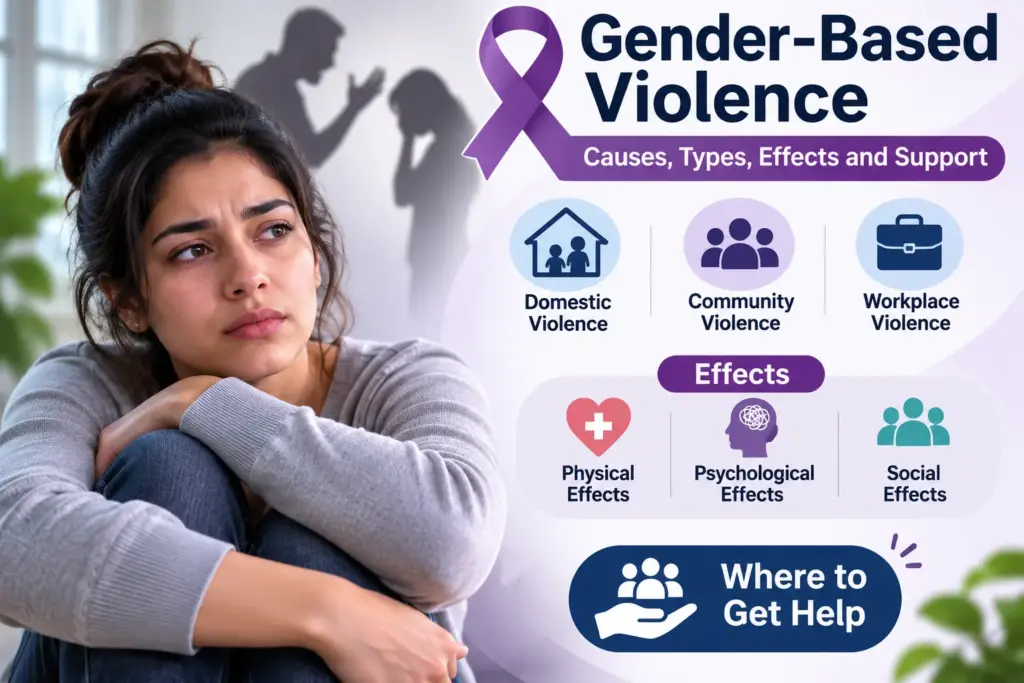
Gender-based violence is a serious issue that affects individuals, families and communities around the world. It can happen at home, in public places or at work, and it can affect a person’s physical and mental well-being.
Although women and girls are disproportionately affected, men can also experience gender-based violence.
Many people suffer in silence because they fear being judged, feel dependent on others or do not know where to seek help.
Understanding gender-based violence, its causes and its effects is an important step towards recognising abuse and finding support.
What Is Gender-Based Violence?
Gender-based violence (GBV) refers to harmful actions directed at someone because of their gender.
It includes physical, psychological and sexual violence that may occur within families, communities or workplaces.
Gender-based violence can affect people of different ages and backgrounds. Its effects are not limited to the person experiencing abuse. Families, children and communities may also be affected.
Factors That Contribute to Gender-Based Violence
Several social and personal circumstances can contribute to gender-based violence or make it more difficult for people to escape abusive situations.
These include:
- Male-dominated social structures: Communities where men hold greater power and authority may create conditions that allow abuse or discrimination against women.
- Gender discrimination: Unequal treatment of women and men can contribute to harmful behaviour and unfair power relationships.
- Family separation: Women and children living away from their families may have less access to emotional and practical support.
- Changes in traditional support systems: Changes in family structures and community traditions may sometimes reduce the support available to women and mothers.
- Living apart from a partner: Couples living separately may experience reduced access to family or community support in certain circumstances.
- Dependence on others: Financial, emotional or social dependence can make it harder for someone to leave an abusive situation.
- Limited access to healthcare: Difficulties accessing appropriate healthcare services can prevent women and children from receiving help for physical and psychological problems.
- Lack of awareness: Limited knowledge about gender-based violence, personal rights and available legal protections may prevent people from recognising abuse or seeking help.
These circumstances do not automatically cause violence. However, they can increase vulnerability or make it harder for people to access support.
Types of Gender-Based Violence
Gender-based violence can take different forms depending on where it happens and the relationship between the people involved.
The main situations discussed here are domestic violence, violence within the community and workplace violence.
Domestic Violence
Domestic violence is one of the most common forms of gender-based violence.
It can involve abuse by a husband, wife or intimate partner. Women may experience violence from male partners, while men can also experience abuse from female partners.
Domestic violence often happens privately, making it difficult for others to recognise what is happening.
In some families, abusive behaviour is dismissed as a personal matter or treated as a normal part of married life.
However, domestic violence is not simply a private family problem.
Women may also experience abuse from parents, relatives or other family members.
Community Violence
Community violence can occur when people use power, intimidation or social influence to harm others.
In some communities, beliefs that men are superior to women can contribute to discrimination and violence.
These attitudes may also lead people to excuse or justify abusive behaviour by men.
When harmful behaviour is accepted or ignored by society, those experiencing abuse may find it more difficult to speak out or seek protection.
Workplace Violence
Workplace gender-based violence includes physical, psychological or sexual abuse experienced by women in their working environment.
It can happen in both public and private organisations.
Abuse in the workplace can affect a person’s safety, emotional well-being and ability to work comfortably.
Effects of Gender-Based Violence
Gender-based violence can have serious and lasting effects on a person’s physical health, mental health and social life.
These consequences may continue even after the violence has stopped.
Physical Effects
Gender-based violence can result in several physical health problems, including:
- Physical injuries and, in severe cases, loss of life.
- Sexually transmitted infections (STIs).
- Unintended pregnancies.
- Unsafe abortions and pregnancy-related complications, including maternal death.
- Sexual health problems and difficulties with sexual functioning.
The severity of these effects can vary depending on the type and extent of the violence.
Psychological and Emotional Effects
Experiencing abuse can also have a major impact on mental health.
Possible effects include:
- Difficulty sleeping or insomnia.
- Fear, anxiety and phobias.
- Substance misuse.
- Depression.
- Social withdrawal and isolation.
- Suicidal thoughts or behaviour.
Psychological harm may not always be visible, but it can affect everyday life, relationships and overall well-being.
Social Effects
Gender-based violence can also affect education, family relationships and a person’s position within society.
Possible social consequences include:
- Difficulty returning to school or continuing education.
- Social exclusion and loss of opportunities.
- Stigma and discrimination.
- Rejection of survivors of sexual violence and, in some situations, their children by family members or communities.
- Neglect, blame and unfair treatment by others.
These social consequences can make recovery more difficult, particularly when a person lacks support from family or the wider community.
Where Can Survivors of Gender-Based Violence Get Help?
People experiencing gender-based violence may be able to find support through healthcare services, community organisations and public authorities.
Depending on the country and local services available, sources of support may include:
- Community support services: Local support organisations and, where safe and appropriate, community-based resolution services.
- Police services: Authorities responsible for responding to violence and helping protect people from harm.
- Public health services: Community healthcare providers who can help with physical and mental health concerns.
- Hospitals and medical centres: Healthcare facilities that can provide treatment for injuries and other health problems related to abuse.
- Women’s support organisations: Community organisations that provide practical guidance and assistance to people experiencing violence.
- Family planning and reproductive health organisations: Services that may offer sexual and reproductive healthcare and related support.
- Sexual health clinics: Healthcare services that can help with sexual health concerns following abuse.
The services available may differ between countries and communities.
Final Thoughts
Gender-based violence is not limited to physical injuries. It can also affect emotional health, relationships, education and a person’s place within society.
Domestic violence, community violence and workplace abuse can have serious consequences for individuals and families.
Recognising the signs of abuse and understanding where support is available are important steps towards protecting those affected.
No one should have to accept violence as a normal part of family, community or working life.
Gender-based violence should never be ignored or justified. Everyone deserves to live with safety, dignity and respect.
Comments