
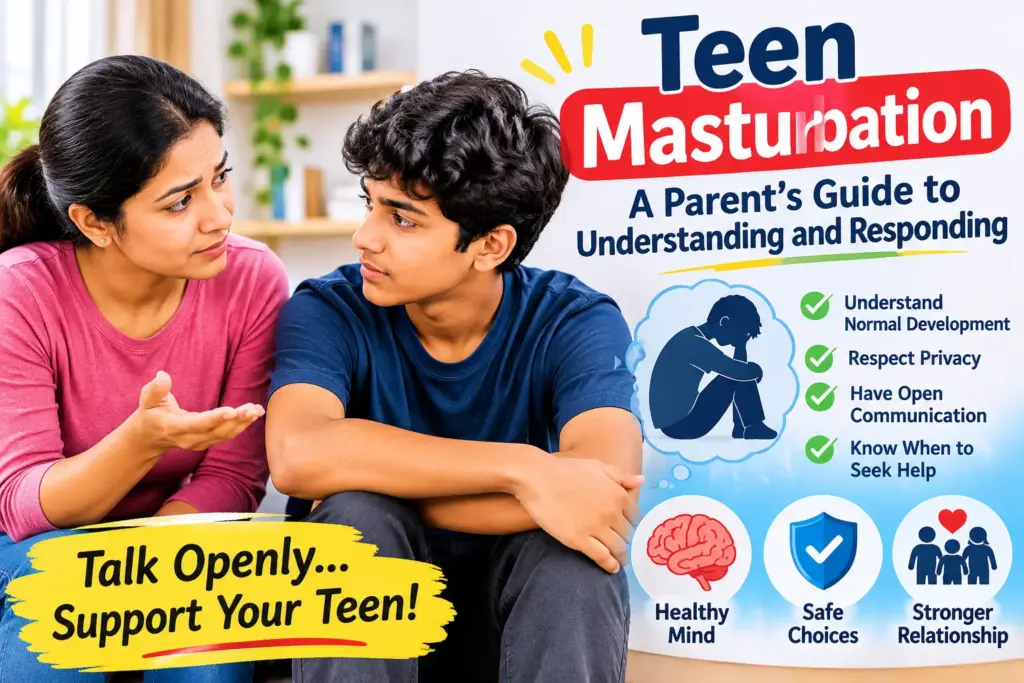
Understanding Adolescent Sexual Development and How Parents Should Respond
Finding your teenager masturbating can be an uncomfortable or unexpected experience for many parents. It may be difficult to know how to react, especially when conversations about sexuality and sexual health are not common within the family.
However, masturbation during adolescence is generally a normal part of growing up. Teenagers are going through a period of physical, emotional and psychological development, during which they become more curious about their bodies and begin understanding their own feelings.
For many young people, masturbation is simply one way of exploring their changing bodies. It is not, by itself, a medical condition or a sign that something is wrong.
Although many adults understand what masturbation is, accepting that their own child may be doing it can be a different experience. The important thing is to understand the behaviour before reacting to it.
Negative Thoughts and Misconceptions
The word masturbation can bring uncomfortable feelings to some people. This is often because of the myths, cultural beliefs and negative attitudes that have surrounded the subject for generations.
In many communities around the world, discussions about masturbation and adolescent sexuality remain sensitive topics. Some families find it difficult to talk openly about sexual development, while others consider these conversations inappropriate or embarrassing.
As a result, teenagers may grow up without having access to accurate information about their changing bodies.
When parents discover that their child is masturbating, their first reaction may be disappointment, anger or confusion. They may even begin questioning whether their child has developed an unhealthy interest in sexual activities.
However, masturbation is generally recognised as a normal aspect of human sexual development. It does not automatically mean that a teenager is sexually active, has an unhealthy attitude towards sexuality or has been exposed to inappropriate behaviour.
Understanding the difference between natural development and genuinely concerning behaviour is important. Parents should avoid allowing personal embarrassment or social misconceptions to influence how they respond to their children.
Adolescence: A Period of Change and Self-Discovery
Adolescence is a period of significant physical, emotional and psychological change. Teenagers experience changes in their bodies, hormonal activity, feelings and relationships.
During puberty, increased sexual awareness and curiosity may encourage young people to explore their bodies and understand how different physical sensations occur.
Masturbation may become part of this self-discovery. Both boys and girls may experience curiosity about their reproductive organs and their developing sexuality.
For this reason, parents should understand that masturbation is not automatically a wrong or unhealthy activity.
Reacting negatively or telling a teenager that their behaviour makes them dirty, bad or abnormal can create unnecessary guilt, embarrassment and anxiety.
Such reactions may also make teenagers less comfortable discussing personal concerns with their parents in the future. When young people feel judged, they may choose to hide their questions and problems rather than seek reliable information or support.
Creating a healthy understanding of sexuality during adolescence can therefore contribute to a more positive relationship with their bodies and future relationships.
How Should You Talk to Your Child?
One of the biggest challenges parents face after discovering their teenager masturbating is deciding whether they should discuss it with their child and, more importantly, how to start that conversation.
In many families, parents may not have received adequate education about sexual and reproductive health themselves. This can make conversations about puberty, masturbation and sexuality difficult.
However, parents do not need to be medical experts to create a supportive environment. They should be willing to learn, understand their child’s concerns and provide accurate information whenever possible.
There are several ways to make these conversations more comfortable.
Start with Understanding
Before speaking to your teenager, take some time to understand the subject yourself. Learning about adolescent development and sexual health can help you approach the conversation with greater confidence.
Choose a Comfortable Way to Communicate
Not every teenager feels comfortable discussing personal matters face to face. Some may find it easier to communicate through text messages or telephone conversations.
Technology can sometimes provide an additional way for parents and teenagers to discuss sensitive subjects. However, personal conversations should remain supportive, respectful and private.
Create an Open Relationship
Parents should try to build a relationship in which teenagers feel comfortable sharing their questions and concerns without worrying about being judged.
You do not need to turn every conversation into a serious lecture. Sometimes, simply listening and showing genuine interest in your child’s feelings can make a significant difference.
Respond Without Shame or Embarrassment
One of the most important things parents should remember is not to embarrass, humiliate or make fun of their teenagers if they discover them masturbating.
Avoid mocking their behaviour or making negative comments about their reproductive organs or developing bodies.
Masturbation itself is generally a normal behaviour, and making a teenager feel ashamed of their body may create unnecessary emotional difficulties.
Parents should also avoid threatening, frightening or punishing their children simply to make them stop masturbating.
Instead, focus on helping teenagers understand the difference between private and public behaviour.
They should learn that personal activities involving their bodies belong in private spaces, where their privacy and the privacy of others are respected.
This is also an opportunity to discuss personal boundaries, bodily autonomy and respect for other people’s privacy.
Respect Your Teenager’s Privacy
Imagine accidentally opening your teenager’s bedroom door and discovering them masturbating.
It may be an unexpected and uncomfortable moment, but your response can make a significant difference.
Rather than reacting angrily or immediately questioning your child, remain calm. You can simply leave the room and allow your teenager some privacy.
If you entered without knocking, it may be appropriate to apologise later for interrupting their private moment.
Going forward, develop the habit of knocking before entering their bedroom. This small action helps teenagers understand that their personal space and privacy are respected.
It is also important to remember that the moment of discovery is not necessarily the best time to discuss the subject.
Both parents and teenagers may feel embarrassed or uncomfortable immediately after such an incident. Waiting until everyone is calm can make the conversation easier and more productive.
A respectful approach helps maintain trust between parents and children.
When Should Parents Become Concerned?
Although masturbation is generally a normal part of adolescent development, there are situations where parents may need to pay closer attention.
The important factor is not simply how frequently a teenager masturbates. Instead, parents should consider whether the behaviour is affecting their child’s everyday life, emotional well-being or relationships.
For example, if masturbation becomes so disruptive that a teenager regularly neglects schoolwork, sleep, personal responsibilities, hobbies or social activities, it may be worth exploring what is happening.
Parents can gently explain the importance of maintaining a healthy balance between personal activities, education and other responsibilities.
Masturbation should not become the only way a teenager manages difficult emotions or stress.
It is also important to seek professional guidance when the behaviour:
- Causes physical pain, injury or significant emotional distress.
- Repeatedly interferes with education, sleep or everyday responsibilities.
- Continues in public despite appropriate guidance about privacy.
- Involves pressure, force, coercion or another person’s boundaries being violated.
- Appears alongside other concerning emotional or behavioural changes.
Unusual or age-inappropriate sexual behaviour may sometimes be associated with exposure to inappropriate sexual content, abuse or other difficult experiences. However, masturbation alone does not mean that a child has been sexually abused.
If you suspect that someone is exploiting, grooming or abusing your child, take the concern seriously and seek appropriate safeguarding and professional support.
When necessary, a qualified paediatrician, child psychologist or mental health professional can help assess the situation.
Understanding Sexual Relationships, Consent and Legal Responsibilities
Another important responsibility for parents is helping teenagers understand relationships, personal boundaries and sexual responsibility.
Some adolescents may already be curious about sexual relationships or may be experiencing romantic relationships while continuing their education.
Parents should not avoid these subjects simply because they feel uncomfortable discussing them.
The legal age of sexual consent and the laws relating to sexual activity involving young people differ across countries and jurisdictions. Therefore, it is not accurate to assume that the same legal rules apply everywhere.
Parents should become familiar with the laws in their own country and explain why age, consent, maturity and personal responsibility matter.
It is particularly important for teenagers to understand that sexual pressure, coercion, exploitation and unwanted sexual contact are never acceptable.
Young people should also know that an adult taking advantage of a child or teenager is a serious safeguarding concern and should never be treated as a normal relationship.
Age-appropriate conversations about healthy relationships, consent, sexually transmitted infections and pregnancy prevention can help teenagers make informed decisions and recognise unsafe situations.
Helping Your Child Find Healthy Ways to Manage Stress
Some teenagers may turn to masturbation when they feel stressed, anxious, emotionally overwhelmed or simply want to relax.
Although it may be one way of experiencing comfort, it is important for young people to understand that it is not the only way to manage stress.
Parents can encourage their children to develop other healthy activities that support emotional well-being.
For example:
- Listening to music.
- Participating in sports or regular exercise.
- Spending time on hobbies and creative activities.
- Talking with trusted friends or family members.
- Taking time to relax and maintain healthy sleep habits.
If a teenager regularly relies on one behaviour to manage emotional difficulties, parents should try to understand the feelings behind it rather than simply focusing on stopping the behaviour.
Open communication can help identify underlying stress, anxiety or other personal challenges.
When Professional Support Is Needed
Sometimes parents may find it difficult to discuss sexual health and personal development with their teenagers.
There is no need to feel that you must handle every situation alone.
Depending on your child’s needs, you may consider seeking support from:
- A trusted and responsible adult.
- A qualified doctor or paediatrician.
- A child or adolescent psychologist.
- A professional counsellor.
- A qualified school counsellor or child protection professional.
If your teenager feels more comfortable speaking with another trusted adult or healthcare professional, providing that opportunity can be helpful.
Professional support is particularly important when there are signs of emotional distress, possible abuse, coercion or behaviour that seriously affects everyday life.
At the same time, parents should continue building a close and trusting relationship with their children. Being approachable, listening without judgement and respecting their privacy can encourage teenagers to share their concerns more openly.
Final Thoughts
Discovering that your teenager masturbates may initially feel uncomfortable, but it is important to understand that adolescent self-exploration is generally a normal part of human development.
Rather than responding with anger, shame or fear, parents should focus on education, healthy boundaries, privacy and open communication.
Sexual and reproductive health education is not only about explaining physical changes. It is also about helping young people understand their bodies, develop self-respect, recognise personal boundaries and build healthy relationships.
Parents, educators and healthcare professionals all have a role in creating an environment where teenagers can ask questions and receive accurate information without embarrassment.
The most important thing is not to make your teenager afraid of discussing their feelings or their body. It is to make sure they know they can always turn to you for understanding, guidance and support.
Comments