
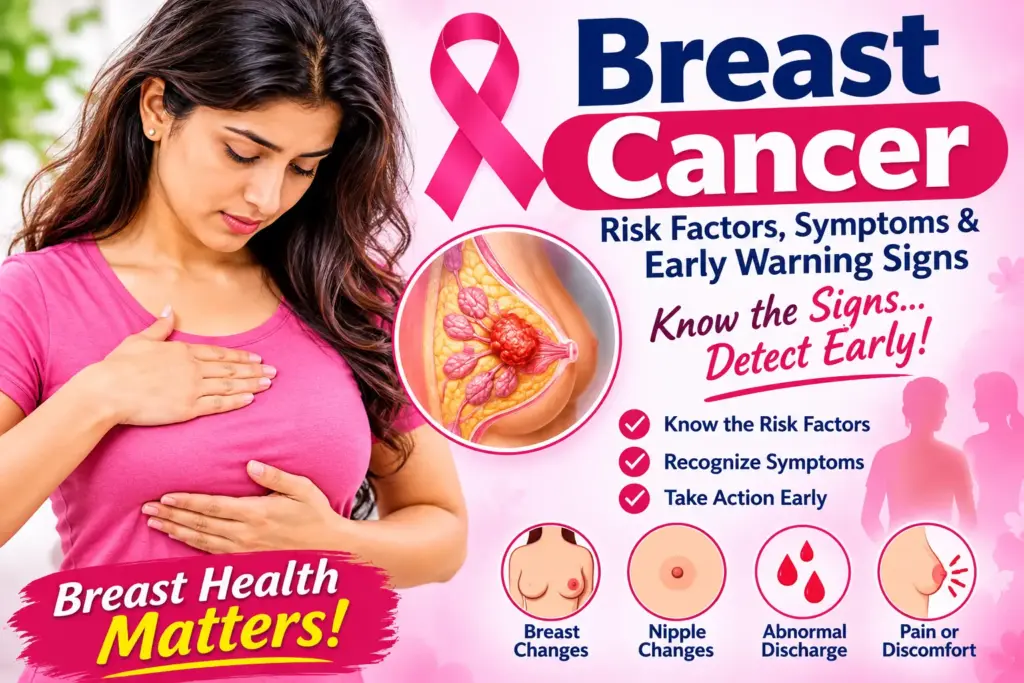
Understanding Breast Cancer in Women and Men
Breast cancer is often considered a health condition that mainly affects women. However, one important fact that everyone should understand is that breast cancer can affect both women and men.
Although it is much more common in women, men can also develop breast cancer because they have breast tissue where cancer cells can grow. According to the World Health Organization (WHO), approximately 99% of breast cancer cases occur in women, while around 0.5–1% occur in men.
This means that women have a significantly higher risk of developing breast cancer than men. Nevertheless, awareness of the condition is important for everyone, regardless of gender.
What Is Breast Cancer?
Breast cancer is a disease that develops when cells in the breast begin to grow and divide abnormally without normal control.
It commonly begins in the milk-producing glands (lobules) or the milk ducts that carry milk towards the nipple. As these abnormal cells continue to multiply, they can form a tumour.
Some breast cancers grow slowly, while others may develop and spread more quickly. If the cancer is not detected and treated, it can spread to nearby tissues and other parts of the body.
Understanding how breast cancer develops is an important step towards recognising possible warning signs and seeking medical attention at the right time.
Who Has a Higher Risk of Developing Breast Cancer?
Breast cancer does not develop for the same reason in everyone. Several factors can increase a person’s chances of developing the disease. Some are related to genetics and family history, while others are connected to reproductive history, hormones and body weight.
Women with the following characteristics may have a higher risk:
1. A Family History of Breast or Ovarian Cancer
Women who have close family members with a history of breast or ovarian cancer may have an increased risk.
This includes relatives from both the mother’s and father’s sides of the family. For example, having a mother, sister or daughter who has been diagnosed with breast cancer may increase a person’s risk.
Inherited genetic changes, particularly in the BRCA1 and BRCA2 genes, can also significantly increase the likelihood of developing breast cancer.
2. Women Who Have Never Had Children or Had Their First Child Later in Life
Reproductive history can influence breast cancer risk.
Women who have never had a full-term pregnancy or who have their first child at an older age may have a slightly higher risk compared with women who have their first full-term pregnancy at a younger age.
These factors are partly associated with the length of time breast tissue is exposed to certain reproductive hormones.
3. Long-Term Exposure to Oestrogen Hormones
Prolonged exposure to certain hormones can influence breast cancer risk.
For example, some hormone replacement therapies containing oestrogen and progesterone, particularly when used after menopause, are associated with an increased risk.
Women should not use hormone-containing medicines without appropriate medical advice. The risks and benefits of any hormonal treatment should be discussed with a qualified healthcare professional.
4. Women Who Are Overweight After Menopause
Being overweight or having obesity after menopause is another recognised risk factor.
After menopause, the body continues to produce oestrogen through fatty tissue. Higher levels of oestrogen associated with excess body fat may contribute to an increased risk of breast cancer.
Maintaining a healthy body weight and following an active lifestyle can support overall health and may help reduce certain breast cancer risks.
Does Breast Cancer Only Affect People Who Have These Risk Factors?
No. This is one of the most important things to understand about breast cancer.
Having one or more risk factors does not necessarily mean that a person will develop breast cancer. Similarly, people who do not have any known risk factors can still develop the disease.
In fact, many women diagnosed with breast cancer have no known family history or specific risk factors apart from being female and getting older.
On the other hand, some women who have several recognised risk factors may never develop breast cancer during their lifetime.
This is why understanding risk factors should not replace awareness of symptoms or appropriate medical screening. Everyone should pay attention to unusual changes in their breasts and seek medical advice when necessary.
Breast Cancer Around the World
Breast cancer is one of the most significant health concerns affecting women worldwide.
According to the World Health Organization, breast cancer was the most commonly diagnosed cancer among women in 164 out of 186 countries in 2024.
Although women account for the vast majority of breast cancer cases, men can also develop the condition. Male breast cancer is less common, but it should not be overlooked.
Breast cancer can occur in different age groups, although the risk generally increases as people get older.
Access to early detection, accurate diagnosis and appropriate treatment plays an important role in improving outcomes. For this reason, breast health awareness and access to healthcare services remain important public health priorities across the world.
What Are the Common Symptoms of Breast Cancer?
Recognising changes in the breasts is important because early signs of breast cancer are not always painful or easy to notice.
Some changes may be harmless and caused by conditions other than cancer. However, new or unusual changes should be checked by a healthcare professional rather than ignored.
The most common warning signs include:
1. A New Change in Breast Shape or Size
An unusual change in the size, shape or appearance of one breast compared with the other may be a possible warning sign.
Although natural differences between breasts are common, a newly developed or noticeable change should be assessed.
2. A Dimple or Indentation in the Breast
A particular area of the breast may begin to pull inward or develop a visible indentation.
This can happen when changes in the underlying breast tissue affect the skin. Any newly developed indentation should be medically assessed.
3. Changes in the Skin of the Breast
Changes in the appearance or texture of breast skin can sometimes be associated with breast cancer.
These changes may include:
- Unusual skin thickening.
- Redness or changes in skin colour.
- Swelling in part or all of the breast.
- Skin dimpling or a texture resembling orange peel.
Not every skin change indicates cancer, but persistent or unexplained changes should not be ignored.
4. A Newly Inverted Nipple or Other Nipple Changes
A nipple that has recently started turning inward, when it previously pointed outward, may be a warning sign.
Other unusual changes in the nipple’s appearance should also be checked by a healthcare professional.
5. Discharge From the Nipple Other Than Breast Milk
Unexpected nipple discharge, particularly when it is bloody or occurs without squeezing the nipple, can sometimes be associated with breast cancer.
Although there are several non-cancerous causes of nipple discharge, it is important to have unusual discharge examined by a doctor.
6. Unusual Breast Pain
Some people with breast cancer experience pain or discomfort in the breast.
However, breast pain alone is not usually the most common sign of breast cancer. Hormonal changes and several non-cancerous conditions can also cause breast pain.
If you experience persistent, unexplained or unusual breast pain, particularly alongside other changes, seek medical advice.
Final Thoughts
Breast cancer can affect both women and men, although it is considerably more common among women. Understanding the condition, knowing the possible risk factors and recognising early warning signs can help people take better care of their health.
It is important to remember that having risk factors does not mean you will develop breast cancer, and having no known risk factors does not guarantee that you will never develop it.
Pay attention to changes in your body, attend recommended screening appointments and consult a healthcare professional if you notice anything unusual.
Breast health awareness is not only about recognising cancer. It is about understanding your body, knowing when to seek medical advice and taking an active role in protecting your long-term health.
Comments