
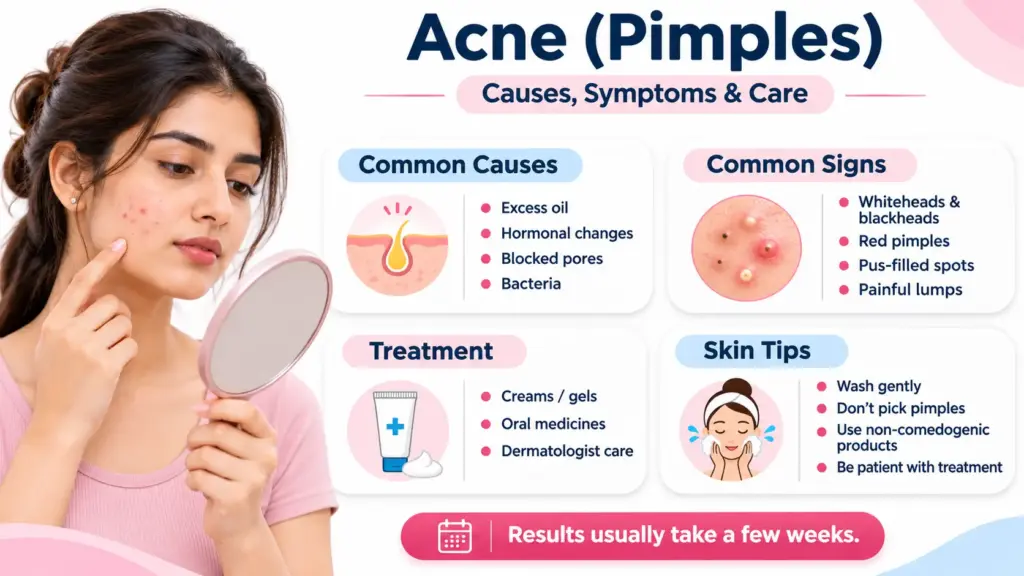
Acne, commonly known as pimples, is one of the most common skin problems, especially among teenagers and young adults. Both boys and girls experience acne, and for some people, it can be frustrating and difficult to manage.
Although acne is often associated with puberty, it can affect adults too. Some people develop only a few small pimples, while others experience painful breakouts that may leave scars.
The good news is that acne can be treated and controlled with proper skincare and medical treatment. Understanding what causes acne is the first step towards managing it.
What Is Acne?
Acne is a common skin condition that develops when hair follicles become blocked with excess oil and dead skin cells.
It usually appears on the face, neck, chest, shoulders and back, where the skin has more oil-producing glands.
Acne can appear as small white or black spots, red pimples, pus-filled bumps or deeper, painful lumps under the skin.
It is particularly common during puberty because of hormonal changes, but acne can continue into adulthood.
What Causes Acne?
Acne develops due to a combination of factors rather than a single cause.
The main causes include:
- Excess Oil Production: During puberty, hormonal changes can cause the skin’s oil glands to become more active. Too much oil can contribute to blocked pores.
- Hormonal Changes: Changes in hormone levels, especially during puberty and menstruation, can trigger acne breakouts.
- Blocked Hair Follicles: Dead skin cells and excess oil can collect inside hair follicles, leading to whiteheads and blackheads.
- Bacteria: A type of bacteria called Cutibacterium acnes, which normally lives on the skin, can contribute to inflammation when follicles become blocked.
Genetics can also play a role. If your parents experienced acne, you may be more likely to develop it.
One important thing to remember is that acne is not caused by having dirty skin. Washing your face too often or scrubbing it aggressively may actually make the irritation worse.
Common Signs and Symptoms of Acne
Acne doesn’t look the same for everyone. Some people have mild breakouts, while others develop more severe skin problems.
Common signs include:
- Oily Skin: The skin may appear shiny or greasy because of increased oil production.
- Whiteheads: Small, closed bumps caused by blocked pores.
- Blackheads: Small, dark spots that develop when clogged pores remain open.
- Red Pimples (Papules): Small, inflamed bumps that may feel tender.
- Pus-Filled Pimples (Pustules): Red bumps with a white or yellow centre.
- Nodules and Cysts: Larger, deeper and often painful lumps that can increase the risk of scarring.
- Acne Scars: Some people develop permanent marks or changes in skin texture after severe acne.
Acne can also cause redness, tenderness and discomfort in the affected areas.
In most cases, a dermatologist can diagnose acne by examining the skin. Special medical tests are usually not necessary.
Why Is Early Acne Treatment Important?
Many people ignore acne, hoping it will disappear on its own. While mild acne may improve over time, some cases can become more severe without proper treatment.
Early treatment can help:
- Reduce existing pimples and inflammation.
- Prevent new breakouts.
- Lower the risk of permanent acne scars.
- Reduce dark marks left behind after pimples heal.
- Improve confidence and emotional well-being.
Acne is not just a cosmetic concern. For some people, it can affect self-esteem and cause significant emotional stress.
Seeking medical advice early, especially when acne is painful or leaving scars, can make a real difference.
Can Acne Be Cured Permanently?
There is no single treatment that guarantees acne will never return. However, several effective treatments can help control breakouts and keep the skin clear.
For many people, acne improves as they get older. Others may need ongoing skincare or maintenance treatment to prevent it from returning.
The right treatment depends on the type and severity of acne, as well as your skin’s sensitivity.
What Are the Best Treatments for Acne?
There are several medical treatments available for acne. A dermatologist can recommend the most suitable option after examining your skin.
1. Topical Treatments (Creams and Gels)
For mild to moderate acne, doctors often recommend treatments applied directly to the skin.
Common options include:
- Benzoyl peroxide
- Topical retinoids, such as adapalene
- Azelaic acid
- Topical antibiotics, usually combined with other acne treatments
These medications help reduce blocked pores, bacteria and inflammation.
2. Oral Medications
Moderate to severe acne may require medication taken by mouth.
Depending on the condition, a doctor may prescribe:
- Oral antibiotics for inflammatory acne.
- Certain hormonal treatments, including suitable contraceptive pills for some women.
- Anti-androgen medications for selected patients.
- Oral isotretinoin for severe acne or acne that has not responded to other treatments.
Some acne medications can cause serious side effects and are not suitable during pregnancy. Oral isotretinoin requires specialist supervision because of its significant risks, including severe harm to an unborn baby.
Never start prescription acne medication without medical advice.
3. Other Dermatological Treatments
In selected cases, dermatologists may recommend procedures such as chemical peels or other treatments to help manage certain acne-related skin concerns.
These procedures are not suitable for everyone and should be performed under professional guidance.
How Long Does Acne Treatment Take to Work?
Acne treatment takes time, and results are not usually visible overnight.
Some people notice improvement after 4 to 6 weeks, but it often takes 6 to 8 weeks to see a clear reduction in breakouts. More noticeable improvement may take 2 to 3 months.
The exact time depends on the treatment and severity of acne.
Even if your skin begins to improve, do not stop prescribed medication without speaking to your doctor. Some people need maintenance treatment to keep their acne under control.
Simple Skincare Tips for Acne-Prone Skin
Along with medical treatment, good skincare habits can help reduce irritation and prevent acne from getting worse.
1. Avoid Squeezing Pimples
Popping or squeezing pimples can increase inflammation, damage the skin and lead to permanent scars or dark marks.
2. Wash Your Face Gently
Wash your face twice a day using a mild cleanser and lukewarm water.
Avoid harsh scrubs and excessive washing, as they can irritate the skin.
3. Choose the Right Skincare Products
Look for products labelled “non-comedogenic” or “won’t clog pores.”
These are generally better choices for acne-prone skin, including moisturisers, sunscreen and makeup.
4. Don’t Skip Moisturiser
Even oily skin needs moisture. Choose a lightweight, non-comedogenic moisturiser to keep your skin comfortable, especially when using acne treatments that cause dryness.
5. Use Sunscreen
Some acne treatments make the skin more sensitive to sunlight. Use a broad-spectrum sunscreen with SPF 30 or higher that is suitable for acne-prone skin.
6. Follow Your Doctor’s Instructions
Use prescribed creams and tablets exactly as directed. Applying more medication than recommended will not necessarily clear acne faster and may cause irritation.
7. Be Patient with Treatment
Avoid changing products every few days. Acne treatments need several weeks to work, and frequently switching products may irritate your skin.
When Should You See a Dermatologist?
Mild acne can sometimes be managed with appropriate skincare and non-prescription treatments.
However, it is best to consult a dermatologist if:
- Your acne is severe, painful or spreading.
- You develop large cysts or nodules.
- Pimples are leaving scars or persistent dark marks.
- Your acne does not improve with suitable treatment.
- Breakouts are affecting your confidence or emotional well-being.
A dermatologist can identify the type of acne you have and recommend a treatment plan that suits your skin.
Final Thoughts
Acne is a common skin condition, and having pimples does not mean you are doing something wrong with your skincare.
Although acne can be frustrating, it can usually be managed with the right treatment and a consistent skincare routine.
Avoid picking at pimples, choose gentle skincare products and give your treatment enough time to work.
Most importantly, seek professional advice if your acne is severe, painful or leaving scars. Getting the right treatment early can help protect your skin in the long term.
Medical Disclaimer: This article is for general educational purposes only and does not replace professional medical advice, diagnosis or treatment. Always consult a qualified healthcare professional for personalised treatment.
Comments