
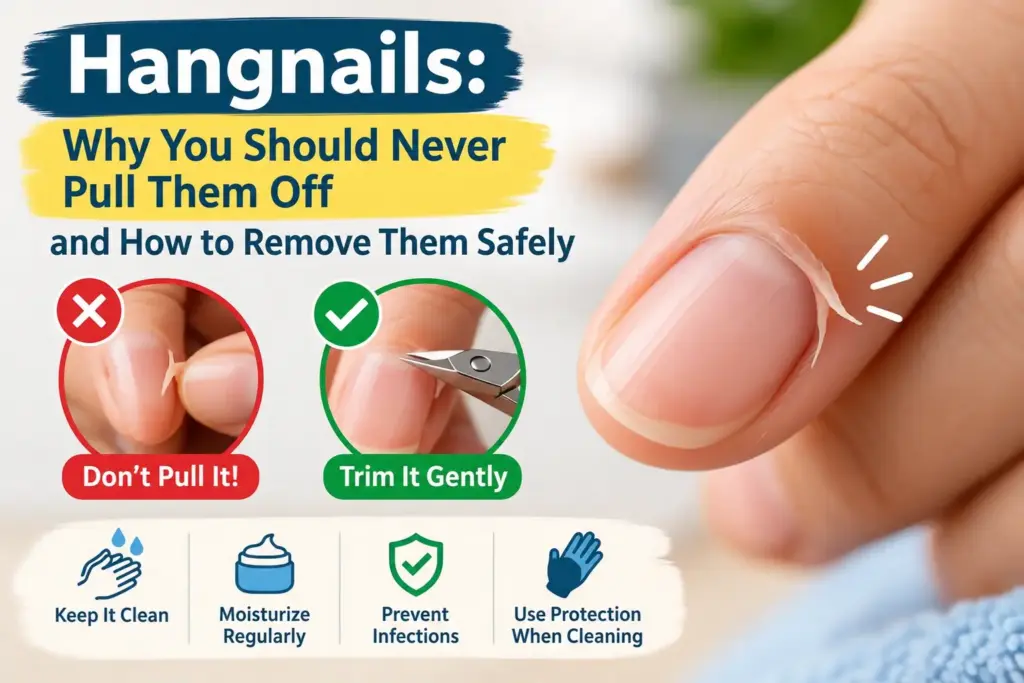
Have you ever noticed a small piece of skin sticking out beside your fingernail and felt the urge to pull it off? Most people have done it at some point. It may seem like a harmless habit, especially when the loose skin looks like it can be removed with one quick tug.
But that little piece of skin, known as a hangnail, can cause more trouble than you might expect. Pulling or biting it off can tear the surrounding skin, cause bleeding and pain, and create an opening for bacteria to enter.
The good news is that hangnails are usually easy to manage at home. You just need to remove them carefully and keep the area clean.
What Exactly Is a Hangnail?
A hangnail is a small piece of dry, damaged skin that separates from the skin around the edge of a fingernail. It often appears near the cuticle or along the sides of the nail.
Although it may look like part of your nail, a hangnail is actually skin. It can feel uncomfortable when it catches on clothing, towels or other objects. Sometimes, even touching it can be painful.
The skin around your fingernails contains many nerve endings. That’s one reason a tiny tear in this area can hurt more than you might expect.
Why Do Hangnails Develop?
Hangnails often develop when the skin around your nails becomes dry, irritated or damaged. Some everyday habits and environmental factors can make them more likely to appear.
Common causes include:
- Dry skin: When the skin loses moisture, it can become rough, brittle and more likely to split.
- Frequent handwashing: Repeated exposure to water and soap can dry out the skin, particularly when you don’t moisturize afterward.
- Cleaning products: Detergents and other harsh chemicals can irritate the skin around your nails.
- Nail biting and picking: Biting your nails or picking at your cuticles can damage the surrounding skin.
- Cold weather: Cold air and low humidity can make the skin around your fingers dry and cracked.
- Frequent exposure to water: Activities such as washing dishes or cleaning can contribute to skin irritation and dryness.
In many cases, hangnails develop because of a combination of these factors rather than one specific cause.
What Happens If You Pull or Bite Off a Hangnail?
Pulling off a hangnail might seem like the quickest way to get rid of it. However, the loose piece of skin may still be attached to healthy skin underneath.
When you pull it, you can accidentally tear that healthy skin as well. This can turn a small irritation into a painful wound.
Here are some problems that may follow.
1. Pain and Bleeding
A hangnail may be small, but pulling it can expose or damage the sensitive skin around the nail. This can cause sudden pain, bleeding and tenderness.
The affected area may also become uncomfortable when you touch it or use your finger.
2. Swelling and Inflammation
Damaging the skin around the nail can trigger inflammation. You may notice redness, swelling and tenderness around the affected area.
These symptoms can make everyday activities, such as typing, washing your hands or handling objects, uncomfortable.
3. Increased Risk of Infection
One of the biggest reasons to avoid pulling or biting hangnails is the risk of infection.
Your skin acts as a protective barrier against bacteria and other germs. When you tear the skin around your nail, you create a small opening through which bacteria can enter.
An infection around the nail is known as paronychia. It may cause redness, swelling, warmth, increasing pain and sometimes pus around the nail.
A mild problem can become more serious if an infection is ignored, so it is important to pay attention to changes in the affected area.
How to Remove a Hangnail Safely at Home
If you have a hangnail, there is no need to pull it off or bite it. A few simple steps can help you remove the loose skin without causing unnecessary damage.
Step 1: Wash Your Hands
Start by washing your hands with soap and clean water. This helps remove dirt and reduce the number of germs on your hands before you touch the affected area.
Make sure your nail clippers or cuticle scissors are also clean.
Step 2: Soak Your Finger in Warm Water
Place the affected finger in warm water for a few minutes.
This helps soften the dry, stiff skin, making it easier to trim. The water should be comfortably warm, not hot.
After soaking, gently dry your finger with a clean towel.
Step 3: Carefully Trim the Loose Skin
Use clean, sharp fingernail clippers or cuticle scissors to gently trim the loose piece of skin close to its base.
Be careful not to cut into the healthy skin or cut too deeply near the cuticle. The aim is simply to remove the loose, damaged piece.
Most importantly, do not pull, tug or bite the hangnail. If it does not come away easily with careful trimming, avoid forcing it.
Step 4: Moisturize and Protect the Area
After trimming, apply a small amount of petroleum jelly or a gentle moisturizer to help protect the skin and prevent it from drying out.
If the area is likely to rub against clothing or other surfaces, you can cover it with a small, clean bandage.
Keep the area clean while it heals. An antibiotic ointment is not always necessary for a simple hangnail; use one if a healthcare professional recommends it.
When Should You See a Doctor?
Most hangnails can be managed at home, but you should not ignore signs that the surrounding skin may be infected.
Contact a healthcare professional if you notice:
- Increasing redness or swelling around the nail.
- Pain that becomes worse rather than improving.
- The affected area feels unusually warm.
- Pus or other fluid collecting around the nail.
- Symptoms that do not improve or continue to get worse.
If you have diabetes, poor circulation or a condition that weakens your immune system, it is particularly important to seek medical advice early when you notice a possible infection.
Do not try to cut into the swollen area or drain pus yourself.
How Can You Prevent Hangnails?
Removing a hangnail safely is important, but preventing them from developing in the first place is even better.
A few small changes to your daily routine can help protect the skin around your nails.
- Moisturize regularly: Apply hand cream or cuticle moisturizer, especially after washing your hands.
- Avoid biting your nails: Biting and picking can damage the skin around your nails and increase the chance of hangnails.
- Wear gloves when cleaning: Protective gloves can reduce direct contact with detergents and harsh cleaning products.
- Use gentle hand soap: Mild cleansers may be less drying than harsh soaps.
- Be careful with cuticle care: Avoid cutting or aggressively pushing back your cuticles, as this can damage the surrounding skin.
- Protect your hands in cold weather: Gloves can help reduce exposure to cold, dry air.
Keeping the skin around your nails moisturized and avoiding unnecessary damage can make a noticeable difference.
Final Thoughts
A hangnail may seem like a tiny problem, but pulling or biting it off can cause unnecessary pain and increase the risk of infection.
Instead of tearing it away, wash your hands, soften the skin with warm water and carefully trim the loose piece using clean nail clippers. Finish by moisturizing and protecting the area.
It is a simple habit that can help you avoid turning a minor skin problem into a more uncomfortable one.
Remember: Never pull or bite a hangnail. A little care is all it usually takes to deal with it safely.
Medical Disclaimer: This article is for general educational purposes only and should not replace professional medical advice, diagnosis or treatment. If you suspect an infection or have a medical condition that affects healing, consult a qualified healthcare professional.
Comments