
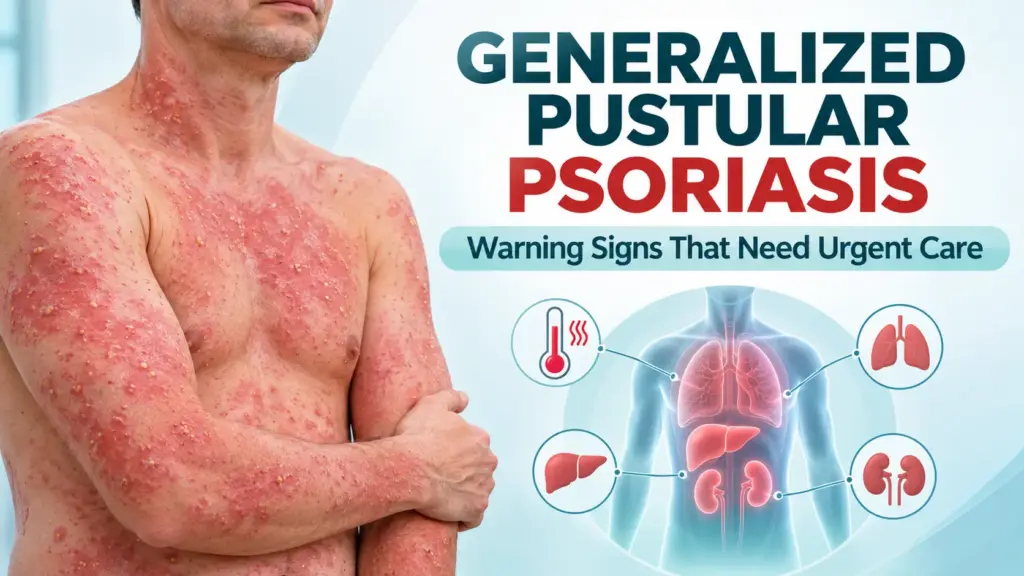
Most people think of psoriasis as a skin condition that causes dry, itchy or scaly patches. While that’s true for some types of psoriasis, there’s a rare and much more serious form that can affect more than just your skin.
It’s called Generalized Pustular Psoriasis, or GPP.
Unlike more common forms of psoriasis, GPP can cause sudden outbreaks of painful, inflamed skin covered with small, pus-filled bumps. But the skin changes are only part of the problem. During a severe flare-up, inflammation can affect other parts of the body, including important organs such as the lungs, kidneys and liver.
Knowing when to seek medical help can make a significant difference, especially because severe GPP flare-ups can develop quickly.
What Is Generalized Pustular Psoriasis?
Generalized Pustular Psoriasis is a rare inflammatory disease that causes widespread inflammation and the development of small, pus-filled bumps called pustules.
These pustules often appear on areas of red or inflamed skin. On darker skin tones, the affected areas may look purple, brown or darker than the surrounding skin rather than bright red.
Although the bumps contain pus, they are not necessarily caused by a bacterial infection. GPP develops because of abnormal inflammatory activity involving the immune system.
What makes this condition particularly concerning is that the inflammation isn’t always limited to the skin.
During a flare-up, some people also experience fever, chills, exhaustion and other symptoms that suggest the body is under significant stress.
A severe flare can become a medical emergency if it isn’t treated promptly.
Why Can GPP Be Dangerous?
A typical skin rash might cause itching or discomfort, but GPP can affect how your entire body functions.
During a severe flare-up, widespread inflammation may interfere with normal organ function. The body can also lose fluids through damaged skin, increasing the risk of dehydration and electrolyte imbalances.
In more serious cases, complications may involve the kidneys, liver or lungs.
This is why doctors take sudden GPP flare-ups seriously, particularly when skin symptoms appear alongside fever, breathing difficulties or unusual weakness.
Even someone who has experienced GPP before should not assume that every flare-up will follow the same pattern.
1. Fever, Chills and a Rapid Heartbeat
One of the first warning signs of a severe GPP flare-up may be a sudden fever.
You might feel unusually hot, experience chills or notice that your heart is beating faster than normal.
These symptoms can be a sign that inflammation is affecting your body beyond the skin.
A rapid heartbeat can also occur when someone is dehydrated or experiencing other medical complications.
If you have GPP and develop widespread pustules along with fever, chills or a racing heartbeat, don’t wait several days to see whether the symptoms improve.
Seek urgent medical attention.
2. Shortness of Breath or Chest Pain
Breathing difficulties should never be ignored, especially during a GPP flare-up.
Severe inflammation can sometimes be associated with complications affecting the lungs and other organs.
You might notice that you’re becoming breathless more easily than usual, struggling to catch your breath or experiencing discomfort in your chest.
Chest pain and shortness of breath can also indicate other serious medical conditions.
If these symptoms develop, seek emergency medical care immediately.
Do not attempt to manage them at home with creams or ordinary pain medication.
3. Unusual Muscle Weakness
Everyone feels tired occasionally, but the weakness associated with a serious illness can feel different.
During a severe GPP flare-up, some people experience significant muscle weakness or feel unusually exhausted.
Simple activities such as walking across a room or getting out of bed may become more difficult.
Weakness can occur for several reasons, including systemic inflammation, dehydration and disturbances in the body’s electrolyte balance.
If muscle weakness appears suddenly or becomes severe during a GPP flare, it needs urgent medical assessment.
4. Nausea, Vomiting and Severe Abdominal Pain
Skin symptoms aren’t the only changes you should pay attention to.
A severe GPP flare-up can sometimes be accompanied by digestive symptoms, including nausea, vomiting and abdominal pain.
Occasional nausea can happen for many reasons. However, persistent vomiting or severe stomach pain alongside widespread skin inflammation is much more concerning.
Vomiting may also make dehydration worse, especially if you’re unable to drink or retain enough fluids.
If these symptoms occur during a GPP flare-up, seek immediate medical advice rather than trying to manage the situation on your own.
5. Dehydration and Reduced Urination
One warning sign that people may overlook is a change in how often they urinate.
During a severe GPP flare-up, the body can lose significant amounts of fluid. Fever, vomiting and inflammation may make the situation worse.
Some signs of dehydration include:
- Feeling unusually thirsty.
- Having a very dry mouth.
- Feeling dizzy or lightheaded.
- Producing much less urine than normal.
- Urinating very little or not at all.
A significant reduction in urination can also indicate a problem with kidney function.
If you notice these symptoms during a GPP flare-up, get emergency medical care.
Drinking more water alone may not be enough to correct severe dehydration or an underlying complication.
6. Yellowing of the Skin or Eyes
Another important warning sign is jaundice.
Jaundice occurs when a yellow pigment called bilirubin builds up in the body, causing the skin or the whites of the eyes to turn yellow.
It can be associated with problems affecting the liver or bile ducts.
Because severe GPP can sometimes involve complications affecting internal organs, jaundice during a flare-up requires urgent medical investigation.
You should also seek medical attention if you notice blood in your urine or stools.
These symptoms are not typical changes that should simply be ignored during a skin flare-up.
7. Confusion or Difficulty Thinking Clearly
One of the most serious warning signs is a sudden change in mental awareness.
A person may seem unusually confused, have trouble concentrating or struggle to respond normally.
They might also feel extremely dizzy, weak or disoriented.
These symptoms can indicate a serious medical emergency, particularly when they occur alongside fever, rapid breathing or severe pain.
Do not wait for these symptoms to disappear.
Get emergency medical help immediately.
Can Generalized Pustular Psoriasis Lead to Sepsis?
In severe cases, people with GPP may develop serious complications, including infections that can lead to sepsis.
Sepsis is a life-threatening medical emergency that happens when the body’s response to an infection causes widespread damage to its own tissues and organs.
Although GPP itself is an inflammatory disease and its pustules are usually not caused by infection, damaged skin and severe illness can increase the risk of complications.
Some symptoms of a severe GPP flare-up can also resemble those of sepsis.
Important warning signs include:
- Fever or an unusually low body temperature.
- A very fast heartbeat.
- Rapid breathing.
- Severe pain or discomfort.
- Confusion or difficulty staying alert.
- Feeling faint or extremely weak.
Sepsis cannot be reliably diagnosed at home.
If someone with GPP develops these symptoms, emergency medical assessment is essential.
What Should You Do During a Severe GPP Flare-Up?
If you have been diagnosed with GPP and suddenly develop widespread pustules along with fever, breathing difficulties, chest pain or other serious symptoms, go to the nearest emergency department.
Do not wait for a routine dermatology appointment.
If you’re feeling faint, confused or seriously unwell, do not drive yourself. Ask someone to help or contact your local emergency medical service.
When you arrive at the hospital, explain that you have Generalized Pustular Psoriasis.
This is important because GPP is a rare condition, and not every healthcare professional may immediately recognise it.
If possible, bring information about your medical history and the medications you’re currently taking.
Let the medical team know when your symptoms started, whether they are spreading and whether you’ve experienced similar flare-ups before.
How Is a Severe GPP Flare Treated?
Treatment depends on how severe the flare-up is and whether any complications have developed.
In hospital, doctors may perform blood tests and other investigations to check for inflammation, infection, dehydration and possible organ problems.
Some patients may need intravenous (IV) fluids to restore fluid and electrolyte balance.
Doctors may also prescribe medications to control the inflammatory process responsible for the flare-up.
One treatment developed specifically for GPP is spesolimab, a targeted biological medication that blocks a pathway involved in inflammation.
Other medications may be considered depending on the person’s condition, medical history and availability of treatment.
Antibiotics may be necessary if there is an accompanying bacterial infection, but they do not treat the underlying inflammatory cause of GPP itself.
Severe cases may require hospitalization, close monitoring or intensive care.
The main goals of treatment are to control inflammation, protect vital organs and reduce the risk of complications.
Can You Prevent GPP Flare-Ups?
GPP is a long-term condition, and flare-ups can sometimes happen unexpectedly.
While there is no guaranteed way to prevent every flare, working closely with a dermatologist can help reduce risks and improve disease management.
Certain factors may trigger flare-ups in some people, including infections, stress and changes to particular medications.
One important precaution is to avoid stopping or changing prescribed treatment without medical advice.
Suddenly discontinuing certain medicines, particularly systemic corticosteroids, can sometimes be associated with serious psoriasis flare-ups.
Your dermatologist can help identify possible triggers and develop a treatment plan suited to your condition.
Why Having an Emergency Plan Matters
If you or someone in your family has GPP, preparing for a flare-up before it happens can make an important difference.
Ask your dermatologist what symptoms should prompt an urgent phone call and which symptoms mean you should go directly to an emergency department.
It’s also helpful to keep a list of your medications, allergies, previous treatments and important medical contacts.
Family members should know the warning signs too, especially symptoms such as confusion, difficulty breathing or severe weakness.
Having this information ready can make it easier to get appropriate medical care when symptoms develop suddenly.
Final Thoughts
Generalized Pustular Psoriasis is more than a skin condition. It is a rare but potentially serious inflammatory disease that can affect the entire body during a severe flare-up.
Painful, widespread pustules may be the most visible symptom, but fever, chest pain, breathing difficulties, severe weakness, vomiting, dehydration and confusion are warning signs that require immediate attention.
The most important thing to remember is that you should not try to manage a severe GPP flare-up at home.
Early medical treatment can help reduce the risk of serious complications and protect your health.
If you have GPP, stay in regular contact with your dermatologist, follow your prescribed treatment plan and make sure you know what to do if your symptoms suddenly become worse.
Remember: If you have widespread pustules and feel seriously unwell, seek emergency medical care. Don’t wait for the symptoms to become unbearable.
Medical Disclaimer: This article is intended for educational purposes only and does not replace professional medical advice, diagnosis or treatment. Generalized Pustular Psoriasis can cause life-threatening complications. Seek immediate medical care if you experience symptoms of a severe flare-up.
This is very informative. Thank you!