
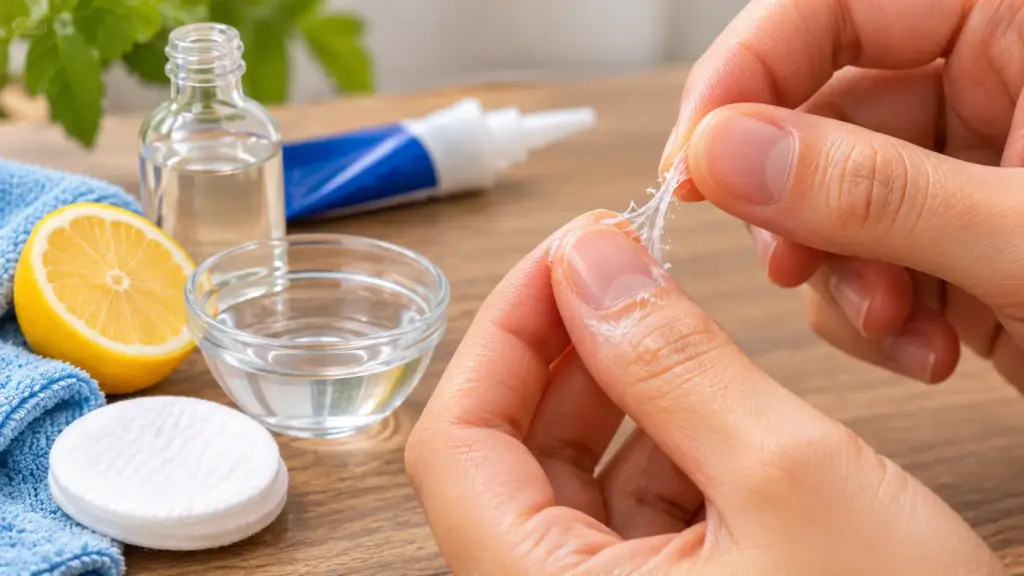
Accidentally getting super glue on your fingers can be a frustrating experience. One moment you’re fixing something around the house, and the next, two fingers are stuck together or a patch of glue has dried on your skin.
Your first instinct might be to pull the glue off or try to scrape it away. But that’s not a good idea. Super glue bonds quickly, and forcing it off can damage the skin underneath.
The good news is that a small amount of super glue on your skin is usually manageable at home. With a little patience and the right approach, you can loosen it without causing unnecessary injury.
Why Does Super Glue Stick to Your Skin So Quickly?
Most household super glues contain a chemical called cyanoacrylate. It reacts with moisture and forms a strong bond within seconds.
Because your skin naturally contains moisture, the glue can harden very quickly when it comes into contact with your fingers. It may stick your fingers together, attach your skin to another surface or leave a hard patch on your hand.
Although this can feel alarming, a small amount of dried super glue on ordinary skin is generally not dangerous. The main concern is damaging your skin while trying to remove it.
How to Remove Super Glue from Your Skin
If you’ve accidentally spilled super glue on your fingers or hands, don’t rush. Try these steps instead.
1. Don’t Pull or Force It Off
This is the most important thing to remember.
Even if the glue looks like it is only attached to a small area, pulling it away forcefully can tear the upper layers of your skin. If two fingers are stuck together, trying to separate them with force can cause bleeding, pain and skin injuries.
Give the glue time to soften rather than trying to remove it immediately.
2. Wash the Area with Warm, Soapy Water
If the glue is still wet, or has recently hardened, start by washing the affected area with warm water and soap.
If your fingers are stuck together, soak them in warm, soapy water. You may need to repeat this for some time before the adhesive begins to loosen.
Once the glue starts to soften, gently move the stuck skin with a slow rolling motion. Avoid pulling the fingers directly away from each other.
Don’t use boiling or very hot water. Comfortably warm water is enough.
3. Try Petroleum Jelly or Vegetable Oil
If warm, soapy water isn’t enough, an oily product may help loosen the adhesive.
You can try:
- Petroleum jelly
- Vegetable oil
- Mineral oil
- Hand lotion
Apply a small amount to the affected area and gently massage it into the edges of the glue.
Give it a little time to work. As the adhesive begins to loosen, gently roll or rub the affected skin. If it doesn’t come away easily, stop and try again later.
This method is particularly useful when two fingers or small areas of skin have become stuck together.
4. Use Acetone Carefully if Necessary
If the glue remains firmly attached, a small amount of acetone may help dissolve it. Acetone is commonly found in some nail polish removers.
However, it should be treated with care because it can dry out and irritate your skin.
Before using it, keep these precautions in mind:
- Check that the nail polish remover actually contains acetone.
- Use only a small amount on a small area of intact skin.
- Keep it away from your eyes, lips, mouth and other sensitive areas.
- Never apply it to cuts, broken skin or irritated areas.
- Follow the product instructions and use it in a well-ventilated space.
Let the adhesive soften before gently rubbing it away. Never scrape or pull the glue off.
If you experience burning, irritation or discomfort, stop using the product and wash the area with soap and water.
Important: Never use acetone near your eyes or mouth. Also, avoid applying super glue to cotton or wool materials. The chemical can react with these fabrics and release enough heat to cause burns.
5. Wash and Moisturize Your Skin Afterwards
Once the glue has been removed, wash the area with soap and water to remove any remaining adhesive or removal products.
Pat your skin dry and apply a gentle moisturizer or hand cream. This helps reduce dryness, particularly if you have used acetone.
If the skin has become sore or damaged, avoid applying harsh products and allow the area to recover.
What If the Glue Doesn’t Come Off?
You don’t necessarily have to remove every bit of super glue immediately.
If the glue is only on the surface of your skin and isn’t causing discomfort, you can leave it alone. As your skin naturally sheds its outer layer, the dried adhesive will gradually come away.
This may take several days, depending on how much glue is present and where it has stuck.
Trying to remove it aggressively is usually worse than simply waiting.
When Should You Seek Medical Help?
Most small super glue accidents can be handled without medical treatment. However, some situations need professional attention.
Seek medical advice if:
- A large amount of glue has covered your skin.
- You experience severe pain, blistering or signs of a burn.
- The glue has entered your eyes, nose or mouth.
- Your eyelids or lips have become stuck together.
- Your fingers are firmly bonded and cannot be separated safely.
- You notice significant skin damage or an unusual reaction.
If super glue gets into your eye, rinse with clean water for about 15 minutes and seek urgent medical attention. Do not try to force your eyelids open or use acetone around the eye.
If glue enters the mouth or causes difficulty breathing or swallowing, seek urgent medical assistance.
A Few Simple Tips to Prevent Super Glue Accidents
Super glue is useful for household repairs, but a little care can prevent an unpleasant accident.
- Keep the glue away from your fingers as much as possible.
- Use only a small amount at a time.
- Read the instructions on the packaging before using it.
- Work in a well-ventilated area.
- Consider wearing suitable protective gloves.
- Keep the container tightly closed and away from children.
It is also a good idea to keep the glue away from your face, eyes and mouth while working.
Final Thoughts
Getting super glue on your skin can be annoying, especially when your fingers become stuck together. But there’s no need to panic or start pulling at the adhesive.
Start with warm, soapy water. If needed, try petroleum jelly or vegetable oil to loosen the bond. Acetone may be another option for a small area of intact skin, but it must be used carefully and kept away from sensitive areas.
Most importantly, remember that patience is safer than force. If the glue doesn’t come off straight away, leaving it to wear away naturally is often the better choice.
Medical Disclaimer: This article is for general educational purposes only and does not replace professional medical advice. Seek medical attention for eye or mouth exposure, burns, significant skin injuries or other serious reactions.
Comments