
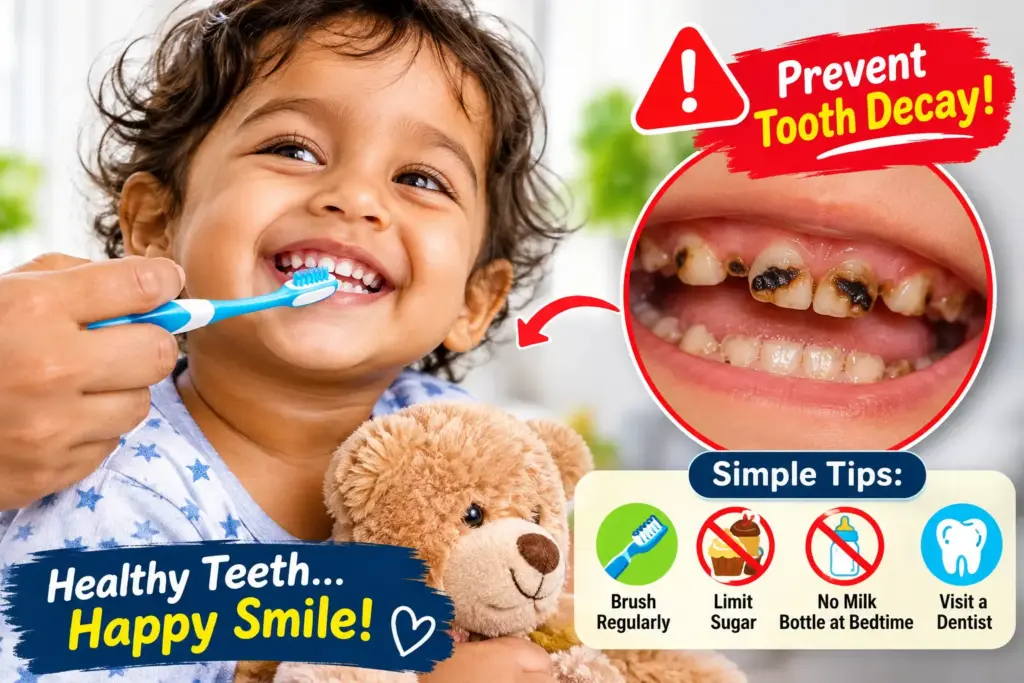
Is there anything more beautiful than seeing your baby smile? That little smile can brighten your entire day. But did you know that a serious dental problem could be hiding behind those tiny teeth?
We’re talking about tooth decay.
Many parents believe that baby teeth aren’t particularly important because they will eventually fall out and be replaced by permanent teeth. But this is a common misconception.
Taking care of your child’s baby teeth is just as important as looking after their permanent teeth. Healthy baby teeth play an important role in your child’s overall health, eating habits and the proper development of their future teeth.
The good news is that childhood tooth decay can often be prevented with a few simple habits at home.
Let’s look at why babies develop tooth decay, what problems it can cause and how you can protect your little one’s smile.
Why Do Babies Get Tooth Decay?
One of the main reasons children develop tooth decay is frequent exposure to sugary foods and drinks.
When babies and young children regularly consume sweets, chocolates, toffees, biscuits and sugary beverages, their risk of developing cavities increases.
But sugar isn’t the only thing parents need to pay attention to. The frequency of exposure also matters.
Bacteria naturally present in the mouth use sugars from food and drinks to produce acids. These acids gradually damage the protective outer layer of the teeth, known as enamel.
Over time, this can lead to cavities and more serious dental problems if proper care is not taken.
The Hidden Danger of Sleeping With a Milk Bottle
Have you ever allowed your baby to fall asleep while drinking milk from a bottle?
It might seem like a harmless bedtime habit, but regularly allowing babies to sleep with a milk bottle in their mouths can increase the risk of early childhood tooth decay.
This condition is commonly known as baby bottle tooth decay or nursing bottle caries.
Milk contains natural sugars, including lactose. When milk remains around the teeth for extended periods, particularly during sleep, bacteria in the mouth can use these sugars to produce acids that damage the teeth.
During sleep, saliva production naturally decreases. This means the mouth has less natural protection against acids.
As a result, repeatedly falling asleep with a bottle containing milk can create conditions that encourage tooth decay.
It’s important to remember that breast milk and regular infant formula are not harmful by themselves. The concern is prolonged and frequent exposure, especially when a baby falls asleep while feeding.
What Happens When Your Baby’s Teeth Start Decaying?
Tooth decay doesn’t usually happen overnight. It can develop gradually, and the early signs may be easy for parents to miss.
In the beginning, you might notice small white spots appearing on the surface of your baby’s teeth. These can be early signs of enamel damage.
As the decay progresses, the affected areas may develop brown or black spots. Eventually, the tooth can become severely damaged and may even break down.
Ignoring these changes can lead to several problems.
1. Toothache and Difficulty Eating
Imagine trying to eat your favourite food while experiencing a painful toothache. Even adults find that difficult, so you can imagine how uncomfortable it can be for a baby or young child.
When tooth decay reaches deeper layers of the tooth, it can cause significant pain and sensitivity.
Your child may start refusing food, avoiding certain foods or becoming upset during mealtimes.
If the pain continues, it can also affect their ability to eat comfortably.
2. Problems With the Alignment of Permanent Teeth
Baby teeth are not simply temporary teeth with no important purpose.
They help children chew food, develop speech and maintain the space needed for permanent teeth to come through properly.
If a baby tooth is lost too early because of severe decay, the surrounding teeth may gradually move into the empty space.
This can reduce the space available for the permanent tooth and increase the possibility of alignment problems when it eventually comes through.
In some cases, a dentist may recommend a space maintainer to help preserve that space.
This is one reason why parents should never ignore cavities in baby teeth just because those teeth will eventually fall out.
3. Painful Infections and Pus Formation
Tooth decay can become much more serious when it reaches the inner parts of the tooth.
If bacteria spread into the dental pulp or surrounding tissues, an infection may develop.
This can sometimes result in a dental abscess, which is a collection of pus caused by infection.
You may notice swelling around the gums, facial swelling, tenderness or severe toothache.
A dental infection in a young child should never be ignored. It requires prompt attention from a dentist.
If your child develops facial swelling together with fever or appears very unwell, seek urgent medical care.
4. Changes in Appearance and Self-Confidence
A child’s smile is an important part of their appearance and how they interact with others.
When teeth become badly discoloured, brown or black because of decay, it can affect the appearance of their smile.
As children grow older, visible dental problems may also make them feel uncomfortable or embarrassed about smiling.
This can sometimes affect their confidence and willingness to interact with other children.
Taking care of baby teeth early can help prevent these problems and protect your child’s beautiful smile.
How Can Parents Prevent Tooth Decay in Babies?
Preventing childhood tooth decay doesn’t have to be complicated. A few simple habits, started early, can make a big difference.
Here are some important steps every parent should know.
1. Start Brushing From the First Tooth
Don’t wait until your child has several teeth before introducing toothbrushing.
As soon as the first baby tooth appears, start cleaning it with a soft, age-appropriate toothbrush.
Brush your child’s teeth twice a day:
- Once in the morning.
- Once before bedtime.
Make sure you clean all tooth surfaces gently.
Young children cannot brush their teeth properly on their own, so parents should help and supervise them.
2. Choose Fluoride Toothpaste
Fluoride plays an important role in protecting teeth against decay.
It helps strengthen tooth enamel and makes teeth more resistant to acid attacks.
Choose a fluoride-containing toothpaste suitable for your child’s age.
Only a small amount is needed:
- Under 3 years: Use a tiny smear of toothpaste, approximately the size of a grain of rice.
- From 3 to 6 years: Use a pea-sized amount.
Parents should supervise brushing to make sure children spit out the toothpaste rather than swallowing it.
Using the correct amount of fluoride toothpaste regularly can help protect your child’s developing teeth.
3. Limit Sugary Foods and Drinks
Try to reduce how often your child consumes sugary foods and beverages.
Toffees, chocolates, biscuits and sweetened drinks should not become everyday habits.
Instead, encourage healthier food choices and offer nutritious meals and snacks.
It’s also a good idea to avoid giving sugary foods frequently between main meals.
Remember, it’s not only the amount of sugar that matters. How often your child’s teeth are exposed to sugar also plays an important role in tooth decay.
4. Never Allow Your Baby to Sleep With a Milk Bottle
This is one of the most important habits parents should change.
Avoid allowing your baby to fall asleep with a bottle of milk in their mouth.
If your baby needs a bottle during feeding, make sure you remove it once feeding is finished.
After the last milk feed before bedtime, clean your baby’s teeth. If teeth have not yet appeared, gently clean the gums as part of their oral hygiene routine.
Avoid putting sugary drinks or sweetened liquids in feeding bottles.
These small changes can help reduce the risk of baby bottle tooth decay.
5. Take Your Child for Regular Dental Check-Ups
Don’t wait until your child complains about a toothache before visiting a dentist.
Regular dental examinations help identify early signs of tooth decay before they become more serious.
It is a good idea to establish a dental care routine from an early age.
Parents should arrange their child’s first dental visit when the first tooth appears or by their first birthday.
After that, follow the dentist’s recommendations for regular check-ups. Some children may need to visit more frequently depending on their dental health and risk of tooth decay.
Regular visits also help children become comfortable with dental examinations as they grow.
Final Thoughts
Your baby’s smile is precious, and protecting it starts with the small things you do every day.
Baby teeth may eventually fall out, but that doesn’t mean they can be neglected. Tooth decay can cause pain, eating difficulties, infections and problems with the proper spacing of permanent teeth.
The most important things parents can do are simple: start brushing from the first tooth, use age-appropriate fluoride toothpaste, limit sugary foods and drinks, avoid letting babies sleep with milk bottles in their mouths and arrange regular dental check-ups.
You don’t need complicated routines to protect your child’s teeth. What matters most is developing healthy oral hygiene habits early and following them consistently.
Remember, your baby’s beautiful smile deserves care from the very first tooth. Start protecting it today!
Medical Disclaimer: This article is intended for general educational purposes only. It should not replace professional dental advice, diagnosis or treatment. If your child experiences tooth pain, swelling or signs of infection, consult a qualified dentist.
Comments