
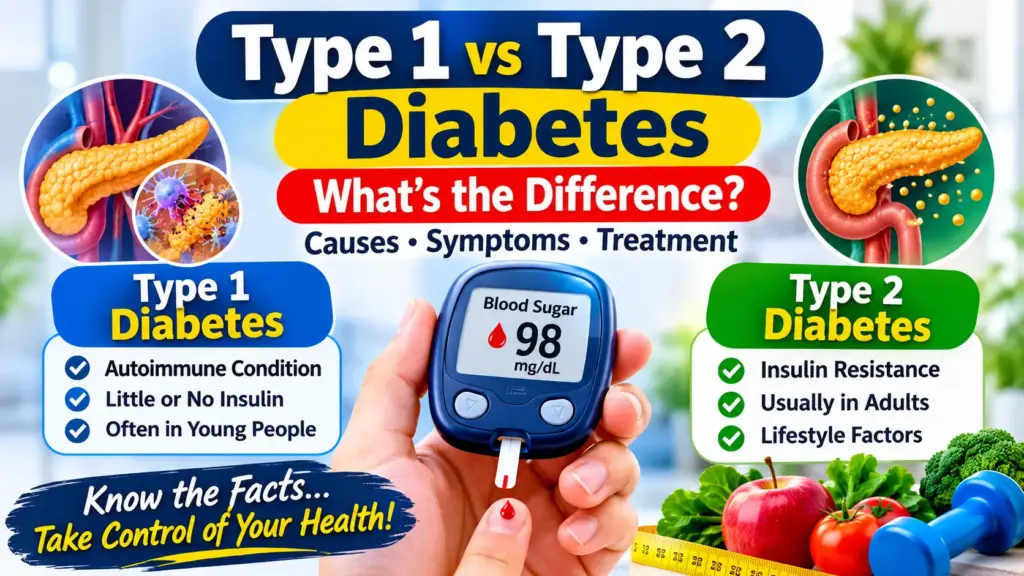
Diabetes is one of the most common health conditions affecting people around the world. You may already know someone who has diabetes, or perhaps you’ve heard people talking about high blood sugar levels and the importance of controlling them.
But did you know that diabetes is not just one condition?
There are different types of diabetes, and each one develops for different reasons. Type 1 and Type 2 diabetes are the two main types people commonly hear about. Although both involve problems with blood sugar regulation, the way they affect the body is quite different.
Understanding these differences is important because the causes, risk factors and treatment options are not the same.
So, what exactly happens inside your body when you develop diabetes? Why does insulin matter so much? And can someone develop diabetes even if they don’t eat too much sugar?
Let’s understand it step by step.
What Is Diabetes?
To understand diabetes, we first need to understand how the body normally uses food for energy.
When you eat, your digestive system breaks down carbohydrates into glucose, a type of sugar that enters your bloodstream. Your body then uses this glucose as its main source of energy.
However, glucose cannot efficiently enter most of your body’s cells without the help of a hormone called insulin.
Insulin is produced by the pancreas, an organ located behind your stomach.
Think of insulin as a key that helps glucose move from your bloodstream into your cells. Once glucose enters the cells, it can be used for energy.
In someone with diabetes, this process doesn’t work properly. The body either doesn’t produce enough insulin or cannot use the insulin it produces effectively.
As a result, too much glucose remains in the bloodstream. When blood sugar stays high for a long time, it can damage important organs and tissues, including the heart, kidneys, eyes and nerves.
Understanding the Role of Pancreatic Beta Cells and Insulin
You might have heard about something called beta cells when learning about diabetes.
Beta cells are special cells found in small groups inside the pancreas. Their main job is to produce and release insulin when blood glucose levels increase.
After you eat a meal, your blood sugar naturally rises. In response, the beta cells release insulin to help your body manage that glucose.
This is a normal process that happens throughout the day.
However, problems can develop when these cells are damaged or when the body becomes resistant to insulin.
This is where the differences between Type 1 and Type 2 diabetes become important.
1. What Is Type 1 Diabetes?
Type 1 diabetes is a condition in which the body’s immune system mistakenly attacks and destroys the insulin-producing beta cells in the pancreas.
Because of this, the pancreas produces very little insulin or stops producing it altogether.
Without enough insulin, glucose cannot properly move from the bloodstream into the body’s cells. Blood sugar levels then become dangerously high if the condition is not treated.
What Causes Type 1 Diabetes?
Type 1 diabetes is an autoimmune condition.
This means the immune system, which normally protects the body against infections, mistakenly attacks its own healthy cells.
Scientists believe that a combination of genetic and environmental factors may contribute to the development of Type 1 diabetes. However, the exact trigger is not fully understood.
One important thing to remember is that Type 1 diabetes is not caused by eating too much sugar or having an unhealthy lifestyle.
It can develop in children, teenagers and adults. Although it is often diagnosed at a younger age, someone can develop Type 1 diabetes at almost any stage of life.
Common Symptoms of Type 1 Diabetes
Symptoms of Type 1 diabetes can appear quite quickly, sometimes over a few days or weeks.
Some common warning signs include:
- Feeling unusually thirsty throughout the day.
- Urinating more frequently than normal.
- Feeling hungry even after eating.
- Losing weight without trying.
- Feeling extremely tired or weak.
- Blurred vision.
If Type 1 diabetes is not recognised and treated promptly, a serious condition called diabetic ketoacidosis (DKA) can develop.
DKA occurs when the body starts breaking down fat for energy because it cannot use glucose properly. This produces substances called ketones, which can build up to dangerous levels in the blood.
Warning signs include nausea, vomiting, stomach pain, rapid breathing and unusual fruity-smelling breath.
DKA is a medical emergency and requires immediate hospital treatment.
How Is Type 1 Diabetes Treated?
People with Type 1 diabetes need insulin treatment because their bodies cannot produce enough insulin naturally.
Insulin is usually given through injections or an insulin pump.
Treatment also involves:
- Regular blood glucose monitoring.
- Learning how food affects blood sugar.
- Following an appropriate meal plan.
- Staying physically active.
- Attending regular medical check-ups.
With proper treatment and monitoring, people with Type 1 diabetes can live active and fulfilling lives.
2. What Is Type 2 Diabetes?
Type 2 diabetes is the most common form of diabetes.
Unlike Type 1 diabetes, the pancreas usually continues producing insulin, especially during the early stages of the condition.
The main problem is that the body’s cells become less responsive to insulin. This is known as insulin resistance.
Think about the key-and-lock example again.
Insulin is the key, and the body’s cells are the locks. In Type 2 diabetes, the locks become less responsive to the key.
The pancreas tries to compensate by producing more insulin. Over time, however, it may struggle to produce enough insulin to overcome the resistance.
As a result, blood glucose levels gradually increase.
What Causes Type 2 Diabetes?
Type 2 diabetes usually develops through a combination of genetic, metabolic and lifestyle factors.
Some factors that can increase the risk include:
- Having a family history of Type 2 diabetes.
- Being overweight or having obesity.
- Not getting enough regular physical activity.
- Getting older.
- Having prediabetes.
- Having a history of gestational diabetes.
However, it is important to understand that Type 2 diabetes is not simply caused by eating too much sugar.
Your overall eating habits, body weight, physical activity, genetics and other health factors all play a role.
Even people who maintain a healthy weight and follow a balanced diet can develop Type 2 diabetes.
Common Symptoms of Type 2 Diabetes
One of the biggest challenges with Type 2 diabetes is that it can develop slowly.
Some people may have elevated blood sugar levels for years without noticing any obvious symptoms.
When symptoms do appear, they can include:
- Increased thirst.
- Frequent urination.
- Feeling tired more often.
- Increased hunger.
- Blurred vision.
- Slow-healing cuts or wounds.
- Frequent skin or urinary infections.
- Tingling or numbness in the hands and feet.
Because symptoms may be mild or absent, regular health check-ups and blood sugar testing are important, particularly for people with risk factors.
How Is Type 2 Diabetes Treated?
Treatment depends on how high the blood sugar levels are and the person’s overall health.
For some people, changes to daily habits can make a significant difference.
Doctors may recommend:
- Healthy eating: Choosing balanced meals with vegetables, whole grains, fibre-rich foods and appropriate portions can help manage blood glucose levels.
- Regular exercise: Activities such as walking, cycling and swimming can help the body use insulin more effectively.
- Weight management: For people who are overweight, losing some excess weight can improve insulin sensitivity and help control blood sugar.
- Medication: Some people need medication, such as metformin or other glucose-lowering medicines, to manage their condition.
- Insulin treatment: Insulin may also be necessary for some people with Type 2 diabetes, particularly when other treatments are not enough.
The right treatment plan should always be decided with a healthcare professional.
3. What Is the Difference Between Type 1 and Type 2 Diabetes?
Although both conditions cause high blood sugar, there are important differences between them.
| Feature | Type 1 Diabetes | Type 2 Diabetes |
|---|---|---|
| Main problem | Immune system destroys beta cells | Insulin resistance |
| Insulin production | Very little or none | Often continues, but may become insufficient |
| Main cause | Autoimmune reaction | Combination of genetic and metabolic factors |
| Common age of diagnosis | Any age, often younger | More common in adults, but can occur at any age |
| Development | Often rapid | Usually gradual |
| Treatment | Insulin is essential | Lifestyle changes, medication and sometimes insulin |
One common misconception is that Type 1 diabetes is more serious than Type 2 diabetes, or that Type 2 diabetes is always mild.
Both conditions require proper medical care. If left uncontrolled, either type can lead to serious complications.
4. Is There Another Type of Diabetes?
Yes. Apart from Type 1 and Type 2 diabetes, there is another important type known as gestational diabetes.
What Is Gestational Diabetes?
Gestational diabetes develops during pregnancy in women who did not previously have diabetes.
During pregnancy, hormonal changes can make the body’s cells less responsive to insulin. If the pancreas cannot produce enough additional insulin to manage these changes, blood glucose levels can rise.
Many women with gestational diabetes do not experience noticeable symptoms.
This is why screening during pregnancy is important. Doctors commonly recommend testing between 24 and 28 weeks of pregnancy, although testing may be needed earlier for some women.
If gestational diabetes is not properly managed, it can increase the risk of complications for both the mother and baby.
Treatment may include dietary changes, physical activity and, when necessary, medication or insulin.
In many cases, blood sugar levels return to normal after childbirth. However, women who have experienced gestational diabetes have a higher risk of developing Type 2 diabetes later in life.
5. How Do Doctors Diagnose Diabetes?
You cannot reliably determine whether you have diabetes just by looking at symptoms.
Doctors use blood tests to check glucose levels and confirm a diagnosis.
Some commonly used tests include:
Fasting Blood Glucose Test
This test measures blood sugar after you have not eaten or drunk anything except water for at least eight hours.
HbA1c Test
This test provides an estimate of your average blood sugar levels over approximately the previous three months.
It is useful because it doesn’t require fasting.
Oral Glucose Tolerance Test (OGTT)
During this test, your blood glucose is measured before and after drinking a glucose-containing liquid. It helps doctors understand how your body processes sugar.
The results are interpreted using established medical criteria, and a second test may be needed to confirm the diagnosis.
If you suspect you have diabetes, speak with a healthcare professional rather than relying on home glucose readings alone for diagnosis.
6. Can Type 2 Diabetes Be Prevented?
Unlike Type 1 diabetes, many cases of Type 2 diabetes can be delayed or prevented, particularly among people with prediabetes or increased risk.
Small changes to your daily routine can make a meaningful difference.
Here are some practical habits worth developing:
- Include more vegetables, fruits and fibre-rich foods in your meals.
- Reduce your intake of sugary drinks.
- Avoid making processed foods the main part of your diet.
- Stay physically active throughout the week.
- Maintain a healthy weight where possible.
- Get enough sleep.
- Attend regular health check-ups if you have risk factors.
You don’t need to completely change your lifestyle overnight.
Starting with a daily walk, improving your food choices and reducing sugary drinks can be a good first step.
However, these habits do not guarantee that you will never develop diabetes. Genetics and other factors also influence your risk.
Final Thoughts
Type 1 and Type 2 diabetes may both cause high blood sugar, but they develop in different ways.
Type 1 diabetes happens when the immune system destroys the insulin-producing cells in the pancreas, meaning the body can no longer produce enough insulin.
Type 2 diabetes develops when the body becomes resistant to insulin and eventually struggles to produce enough to maintain normal blood glucose levels.
Gestational diabetes is another important form that can develop during pregnancy.
Understanding these differences can help you recognise warning signs, seek medical advice at the right time and make better decisions about your health.
Remember, diabetes is not something that should be ignored. Early diagnosis, appropriate treatment and regular monitoring can help reduce the risk of long-term complications.
Your health is worth paying attention to. If you have symptoms or risk factors for diabetes, consider speaking with a healthcare professional and getting your blood sugar checked.
Comments