
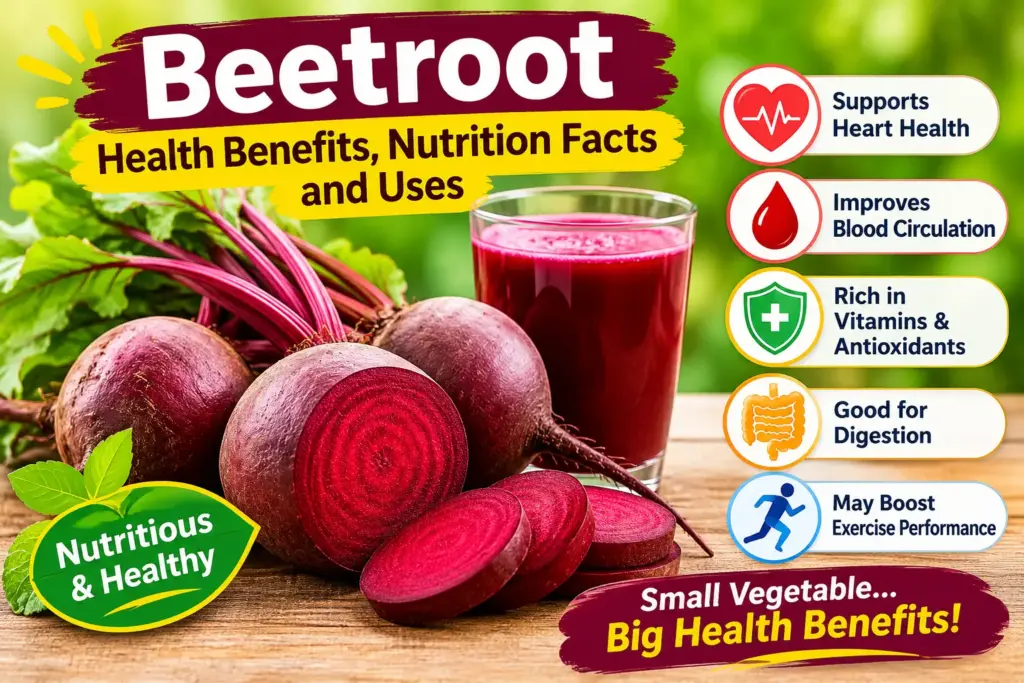
Have you ever wondered why beetroot is often recommended as part of a healthy diet? Its deep red colour makes it stand out among vegetables, but there is more to this root vegetable than its appearance.
Beetroot is packed with useful nutrients and naturally occurring plant compounds that may support different aspects of your health. From helping maintain healthy blood circulation to supporting digestion, this colourful vegetable has several benefits worth knowing about.
Interestingly, it isn’t just the root that deserves attention. Beetroot leaves are also edible and can be included in everyday meals.
So, what makes beetroot a healthy choice, and how can adding it to your diet benefit your body? Let’s take a closer look.
1. What Nutrients Does Beetroot Contain?
One of the reasons beetroot is considered a healthy vegetable is its nutritional content.
It provides several essential nutrients while being relatively low in calories. Some of the nutrients found in beetroot include:
- Folate (Vitamin B9): Helps the body produce healthy cells and is particularly important during pregnancy.
- Vitamin C: Supports normal immune function and helps protect cells from oxidative damage.
- Dietary Fibre: Supports digestion and helps maintain regular bowel movements.
- Potassium: Plays an important role in muscle function and maintaining normal blood pressure.
- Natural Plant Compounds: Beetroot contains betalains and other beneficial compounds that contribute to its nutritional value.
Beetroot also contains natural sugars and small amounts of protein.
Although it isn’t a replacement for other nutrient-rich foods, including beetroot in a balanced diet is a simple way to add more variety to your meals.
2. How Does Beetroot Support Healthy Blood Circulation?
One of the most interesting things about beetroot is its natural nitrate content.
When you eat beetroot, your body can convert some of these dietary nitrates into a compound called nitric oxide.
Why is that important?
Nitric oxide helps relax the muscles surrounding blood vessels, allowing them to widen. This process is known as vasodilation.
When blood vessels relax, blood can flow through them more easily. This is one reason researchers have become interested in beetroot and its potential cardiovascular benefits.
Some studies have found that drinking beetroot juice may help reduce systolic blood pressure in people with hypertension. However, the results are not equally strong across all studies, and more research is needed.
It’s important to understand that beetroot is not a treatment for high blood pressure. If you have hypertension, continue following your healthcare professional’s advice and prescribed treatment.
3. Can Beetroot Improve Exercise Performance?
If you’re physically active or regularly exercise, beetroot might be an interesting addition to your diet.
The natural nitrates in beetroot have been studied for their possible effects on exercise performance.
As mentioned earlier, dietary nitrates can help increase nitric oxide production. This may improve blood flow and influence how efficiently the body uses oxygen during physical activity.
Some research suggests that beetroot juice may help certain people improve their endurance during activities such as running, cycling and other forms of exercise.
However, the benefits aren’t guaranteed.
Results can vary depending on the individual, their fitness level, the amount consumed and the type of physical activity.
For everyday fitness enthusiasts, beetroot can be part of a balanced nutrition plan, but it shouldn’t be considered a shortcut to better athletic performance.
4. Beetroot Contains Antioxidants That Help Protect Your Cells
Have you noticed the deep red or purple colour of beetroot?
Much of this colour comes from natural plant pigments called betalains.
These compounds have antioxidant properties, meaning they can help protect cells against damage caused by unstable molecules known as free radicals.
Oxidative stress is associated with several processes involved in ageing and the development of certain chronic health conditions.
Beetroot also contains other plant compounds that contribute to its nutritional profile.
While laboratory studies have demonstrated interesting properties of betalains, more human research is needed to understand exactly how much these compounds contribute to long-term health.
Still, eating a variety of colourful vegetables is a sensible way to increase your intake of different plant nutrients.
5. Is Beetroot Good for Digestion?
If you want to improve your daily fibre intake, beetroot is one vegetable worth considering.
Dietary fibre plays an important role in maintaining a healthy digestive system. It helps support regular bowel movements and contributes to overall gut health.
Including fibre-rich vegetables in your meals can also help you feel fuller for longer.
Another interesting option is beetroot leaves. Many people focus only on the root and overlook the green leaves growing above it.
However, these leaves are edible and can be prepared in several ways.
You can:
- Add cooked beetroot leaves to rice and vegetable dishes.
- Mix them with other leafy greens.
- Include them in soups.
- Use young leaves in salads after washing them properly.
Eating both the root and the leaves gives you more variety in your diet and helps reduce food waste.
6. Can You Eat Beetroot Every Day?
For most healthy adults, beetroot can be included regularly as part of a balanced diet.
There are several simple ways to enjoy it:
- Eat boiled beetroot as a side dish.
- Add grated beetroot to salads.
- Blend it into fresh vegetable juices.
- Include it in soups and curries.
- Combine it with carrots and other vegetables.
You don’t necessarily need expensive supplements or complicated recipes to enjoy its nutritional benefits.
However, moderation is still important. Eating a wide range of vegetables is generally better than depending on a single food for your nutritional needs.
One thing worth knowing is that beetroot can turn your urine or stools pink or reddish. This is usually harmless and happens because of its natural pigments.
People who have a history of calcium oxalate kidney stones may also need to be mindful of their beetroot intake because it contains oxalates. If you have been advised to follow a low-oxalate diet, speak with your healthcare professional about suitable portions.
Final Thoughts
Beetroot is more than just a colourful vegetable. It provides important nutrients, dietary fibre and natural plant compounds that can contribute to a healthy eating pattern.
Its natural nitrate content makes it particularly interesting when it comes to blood circulation, while its fibre supports normal digestive function. Research also suggests that beetroot juice may offer modest benefits for blood pressure and exercise performance in certain people.
And remember, you don’t have to eat only the root. Beetroot leaves are edible too and can be included in a variety of everyday meals.
The best approach is to enjoy beetroot alongside other vegetables, fruits, whole grains and nutritious foods.
A healthy diet isn’t built around one particular vegetable. It’s the combination of different foods and consistent healthy habits that makes the real difference.
A simple tip: The next time you prepare beetroot, don’t throw away the healthy green leaves. Wash them properly and consider adding them to your next meal.
Comments