
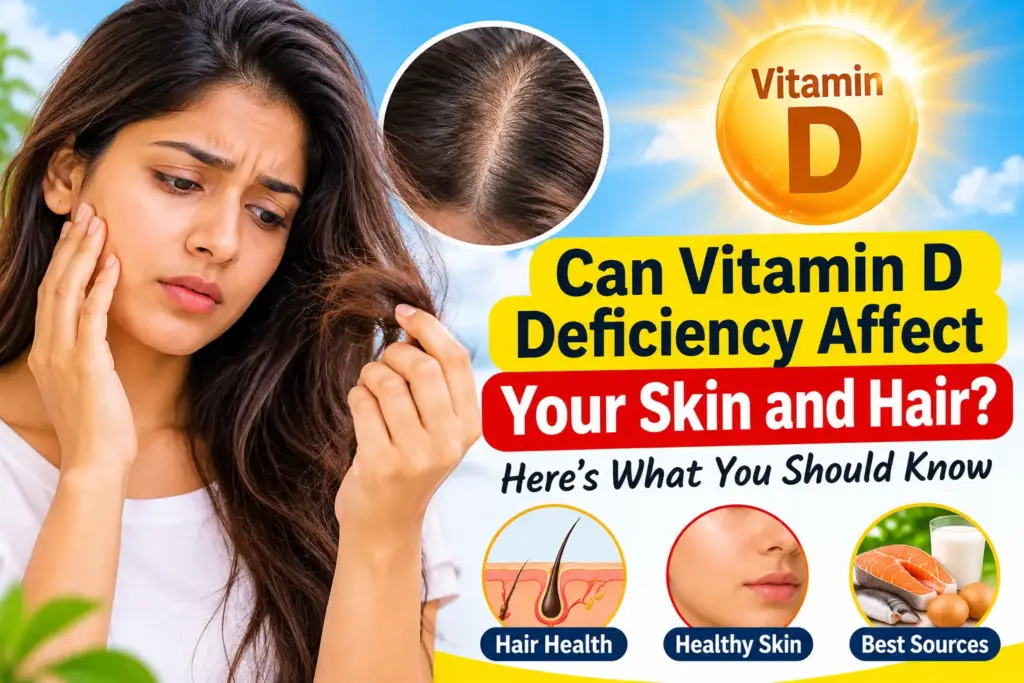
Have you ever noticed your hair falling out more than usual or your skin looking different despite following a regular skincare routine? There could be several reasons behind these changes, and your nutritional health is one factor worth paying attention to.
Vitamin D is often associated with strong bones and healthy teeth. However, its role in the body goes beyond that. It also contributes to normal immune function and several processes that help maintain healthy skin and hair follicles.
But does having low Vitamin D actually affect your appearance? Can it make your hair thinner or your skin look less healthy? Let’s take a closer look at what research tells us.
What Is Vitamin D and Why Does Your Body Need It?
Vitamin D is an essential nutrient that helps your body absorb calcium, which is important for maintaining strong bones and teeth.
Your body can produce Vitamin D naturally when your skin is exposed to ultraviolet B (UVB) rays from sunlight. You can also get it from certain foods and dietary supplements.
Although Vitamin D is best known for supporting bone health, it is involved in several other important bodily functions, including immune system regulation and normal cell activity.
When your body doesn’t get enough Vitamin D over time, it can lead to health problems that shouldn’t be ignored.
1. Can Low Vitamin D Cause Hair Loss?
Hair loss is a common concern for both men and women. While losing some hair every day is completely normal, excessive or unusual hair shedding can sometimes indicate an underlying issue.
There are several possible causes of hair loss, including genetics, hormonal changes, stress, certain medical conditions, and nutritional deficiencies.
Vitamin D is also believed to play a role in the hair growth cycle. Hair follicles contain Vitamin D receptors, which are involved in the normal functioning of hair follicle cells.
Some research has found a connection between low Vitamin D levels and certain hair loss conditions, particularly alopecia areata. This is an autoimmune condition that causes hair to fall out in small, sometimes round patches.
However, this doesn’t mean that everyone experiencing hair loss has a Vitamin D deficiency. Hair loss can have many different causes, and taking Vitamin D supplements won’t necessarily solve the problem.
If you’re experiencing persistent hair loss, it’s worth discussing it with a healthcare professional to identify the actual cause.
2. Does Vitamin D Help Maintain Healthy Skin?
Your skin is the largest organ of your body, and it performs several important functions, including protecting you from external environmental factors.
Vitamin D is involved in skin cell growth, repair, and immune system regulation. These processes help maintain normal skin function.
Researchers have also studied the relationship between Vitamin D and certain skin conditions, including psoriasis. In fact, specific Vitamin D-based treatments are used in dermatology to help manage some skin conditions.
But does low Vitamin D automatically make your skin look dull, damaged, or unattractive?
Not necessarily.
There is currently no strong evidence that Vitamin D deficiency directly causes changes in facial appearance or makes someone’s skin less attractive.
Skin health is influenced by many factors, including genetics, ageing, sun exposure, hydration, sleep, and overall nutrition.
So, if you’ve noticed changes in your skin, it’s important not to assume that Vitamin D deficiency is the only possible explanation.
3. What Are the Common Signs of Vitamin D Deficiency?
One tricky thing about Vitamin D deficiency is that many people don’t experience noticeable symptoms, especially during the early stages.
However, when Vitamin D levels become significantly low, some people may experience:
- Bone pain or discomfort.
- Muscle weakness.
- Frequent muscle aches.
- Fatigue in some cases.
- Increased risk of bone problems over time.
Severe and prolonged Vitamin D deficiency can contribute to conditions such as osteomalacia in adults, which causes bones to become softer and weaker.
Keep in mind that these symptoms can also occur because of other health conditions. A proper medical assessment is necessary to identify the underlying cause.
4. Which Foods Can Help Increase Your Vitamin D Intake?
Sunlight isn’t the only way to get Vitamin D. Certain foods can also contribute to your daily intake.
Here are some good dietary sources:
- Fatty fish such as salmon.
- Sardines and tuna.
- Egg yolks.
- Vitamin D-fortified milk.
- Fortified breakfast cereals.
- Some fortified dairy and plant-based products.
Fatty fish are among the better natural food sources of Vitamin D.
Including these foods in a balanced diet can help support your nutritional needs. However, some people may find it difficult to get enough Vitamin D through food alone.
Your dietary requirements can vary depending on your age, health, lifestyle, and other individual factors.
5. Can You Get Enough Vitamin D From Sunlight?
Yes. Sunlight is one of the main natural sources of Vitamin D.
When your skin is exposed to UVB rays, your body starts producing Vitamin D naturally.
However, there’s something important to remember: more sunlight doesn’t always mean better health.
Excessive exposure to UV radiation can damage your skin and increase the risk of skin cancer. Staying in direct sunlight for too long without protection is not a safe way to increase Vitamin D levels.
The amount of Vitamin D your body produces can also vary depending on your skin tone, age, location, season, time of day, and other environmental factors.
Instead of deliberately exposing your skin to excessive sunlight, focus on maintaining a healthy balance and protecting your skin from UV damage.
6. Will Taking Vitamin D Supplements Make Your Skin and Hair Better?
This is where many people get confused.
Vitamin D supplements can be beneficial for people who have a confirmed deficiency or need additional Vitamin D for medical reasons.
Correcting a deficiency may help improve health problems associated with low Vitamin D levels. However, taking supplements doesn’t automatically mean your hair will become thicker or your skin will look brighter.
There is no reliable evidence that taking extra Vitamin D improves physical appearance in people who already have sufficient levels.
You should also avoid taking high doses without medical advice. Excessive Vitamin D intake can cause Vitamin D toxicity, potentially leading to high calcium levels in the blood and kidney-related complications.
If you suspect that your Vitamin D levels are low, a healthcare professional can advise whether a blood test is necessary and whether supplementation is appropriate.
Final Thoughts
Vitamin D plays an important role in maintaining overall health. While it is best known for supporting strong bones, it also contributes to normal skin function, immune health, and processes involved in hair follicle activity.
Research suggests that low Vitamin D levels may be associated with certain hair loss conditions. However, that doesn’t mean every case of hair loss or poor skin health is caused by Vitamin D deficiency.
If you’ve noticed unusual hair loss, persistent muscle weakness, or bone discomfort, don’t simply rely on supplements or online advice. Speak with a healthcare professional to understand what’s happening.
At the end of the day, maintaining healthy skin and hair isn’t about taking one particular vitamin. A balanced diet, adequate sleep, good skincare habits, and looking after your overall health all matter.
Remember: Taking care of your health is one of the best ways to support your natural appearance. Don’t focus only on how you look; pay attention to how your body feels too.
Comments