
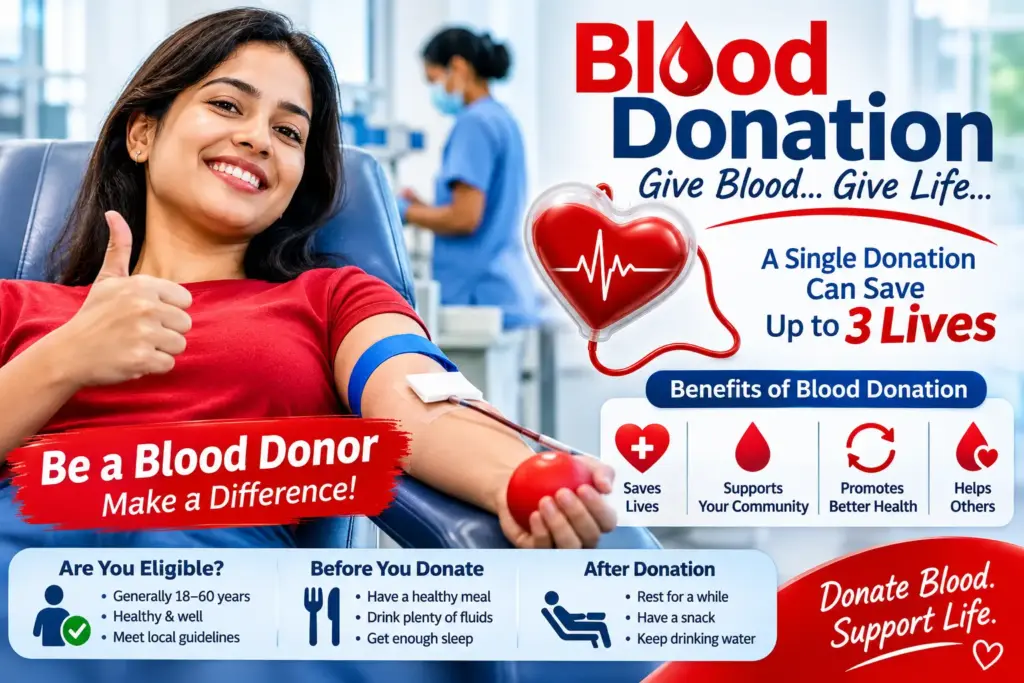
Have you ever thought about donating blood? A simple act of generosity could help save someone’s life. Blood donations play an essential role in modern healthcare, helping patients who need blood during emergencies, major surgeries, childbirth complications, cancer treatment and other serious medical conditions.
Hospitals and healthcare facilities around the world depend on a safe and reliable supply of donated blood. However, blood cannot be manufactured artificially, making voluntary blood donors an important part of every healthcare system.
Why Is Blood Donation So Important?
Blood is needed every day to treat patients with a wide range of medical conditions. For some people, receiving donated blood can mean the difference between life and death.
One blood donation can potentially help up to three patients because donated blood can be separated into different components, including red blood cells, platelets and plasma. Each component can be used to treat patients with different medical needs.
Blood supplies also need to be replenished regularly. Donations may decrease during certain seasons, public emergencies and periods when fewer people are able to attend donation centres. At the same time, hospitals must continue providing treatment to patients who need blood.
This is why blood donation services regularly encourage healthy, eligible individuals to become donors.
Voluntary, unpaid blood donation is an important part of maintaining a safe and sustainable blood supply. Sri Lanka, for example, has a National Blood Transfusion Service that coordinates blood donation and transfusion services throughout the country.
Who Can Become a Blood Donor?
Most healthy adults can donate blood, provided they meet the eligibility requirements of their local blood donation service.
Before accepting a donation, healthcare professionals assess the donor’s health to protect both the person donating blood and the patient who may receive it.
Common eligibility considerations include:
- Age: Many blood donation services accept donors from around 18 years of age. The upper age limit varies between countries. Some services accept regular donors over 65 following an individual health assessment.
- Body weight: A minimum weight of 50 kg is commonly required for standard whole-blood donations. Some countries have different requirements depending on the volume collected.
- Time between donations: You must have waited long enough since your previous donation. The required interval depends on the country and the type of donation.
- Haemoglobin level: Your haemoglobin must meet the minimum level required by the donation service. A commonly used threshold is 12.5 g/dL, although requirements may differ.
- General health: You should be feeling well and should not have an illness or medical condition that makes donating unsafe.
- Pregnancy: People who are pregnant are generally not eligible to donate blood. Additional waiting periods may apply after childbirth.
- Medical and lifestyle history: Certain illnesses, medications, travel history, medical procedures and lifestyle factors may temporarily or permanently affect eligibility.
How Often Can You Donate Blood?
The interval between donations depends on the type of blood product collected and the regulations of the country where you donate.
For example, Sri Lanka’s National Blood Transfusion Service generally requires a minimum interval of four months between whole-blood donations.
In other countries, the recommended interval may be different. Some blood services allow whole-blood donations every 8–12 weeks or follow different schedules based on donor eligibility and individual circumstances.
Platelet and plasma donations may have different intervals from whole-blood donations.
Always follow the schedule provided by your local blood donation service rather than assuming that the same waiting period applies everywhere.
Understanding Donor Health and Risk Assessment
Before donating blood, you will usually be asked questions about your medical history, medications, travel, previous procedures and certain lifestyle factors.
These questions are not intended to judge or embarrass anyone. They help protect the health of both the donor and the person receiving the blood.
Some situations may require you to postpone donation or undergo further assessment.
Examples include:
- Having multiple sexual partners or certain recent sexual exposures that may increase the risk of blood-borne infections.
- Having a recent sexual exposure associated with a higher risk of infections such as HIV or hepatitis.
- Having a history of injecting recreational drugs.
- Having recently received a tattoo, body piercing or certain other procedures.
- Having travelled to areas where diseases such as malaria are present.
- Having a recent infection or a medical condition that could affect blood safety.
Important: Blood donation policies concerning sexual activity and other risk factors differ between countries and are updated over time. For example, rules concerning men who have sex with men are not identical worldwide. Eligibility should be determined using the current screening guidelines of the local blood service, not assumptions about a person’s identity.
If you are unsure whether something in your medical or lifestyle history affects your eligibility, discuss it privately and honestly with the healthcare professional conducting the screening.
What Should You Do Before Donating Blood?
Preparing properly before donating blood can help make the experience safer and more comfortable.
Consider following these recommendations:
1. Eat a proper meal
Do not donate blood on an empty stomach. Have a healthy meal before attending your appointment.
Some donation services, including Sri Lanka’s National Blood Transfusion Service, recommend having a main meal within four hours before donation.
2. Drink plenty of fluids
Drink enough water and other non-alcoholic fluids before your appointment. Being well hydrated can help reduce the likelihood of feeling dizzy or faint during or after donation.
3. Get enough sleep
Try to get a good night’s sleep before donating. At least six hours of rest is recommended by some donation services, although individual guidance may vary.
4. Avoid alcohol
Avoid alcoholic drinks before donating blood. Alcohol can contribute to dehydration and may affect how you feel during the donation process.
5. Wear comfortable clothing
Choose comfortable clothing with sleeves that can be easily rolled up above your elbow. This allows healthcare staff to access the donation site more easily.
6. Be honest during health screening
Tell the healthcare team about any illnesses, medications, recent medical procedures, travel or other relevant health information. This helps them decide whether donating is safe for you and the recipient.
What Happens During Blood Donation?
Blood donation is usually a straightforward procedure carried out by trained healthcare professionals.
After registration and health screening, a healthcare professional will clean the selected area of your arm and insert a sterile, single-use needle into a vein.
The collected blood is then transferred into a specially designed blood collection bag.
The procedure itself usually takes around 8–15 minutes for a standard whole-blood donation, although the total appointment takes longer because of registration, screening and recovery.
After collection, the donated blood is tested and processed before being made available for patient treatment.
What Should You Do After Donating Blood?
Your body needs some time to adjust after donating blood. Following the recommended aftercare instructions can help you recover comfortably.
Here are some important things to remember:
1. Rest before leaving
Remain at the donation centre for the recommended recovery period. Sri Lanka’s National Blood Transfusion Service advises donors to rest for at least 20 minutes after donation. Other services may recommend a different period.
Do not leave until you feel well and the healthcare staff are satisfied that you have recovered.
2. Have a snack and a drink
Enjoy the refreshments provided at the donation centre. Drinking fluids and having a light snack can help you feel better after donating.
3. Continue drinking fluids
Drink extra water and other non-alcoholic fluids over the following hours. Staying hydrated helps your body replace the fluid volume you donated.
4. Keep the dressing in place
Leave the plaster or dressing over the needle insertion site for the period recommended by your donation centre.
For example, Sri Lanka’s National Blood Transfusion Service recommends keeping the plaster in place for approximately 12 hours.
5. Avoid heavy lifting and strenuous exercise
Avoid lifting heavy objects with the donation arm and postpone strenuous physical activities for the rest of the day, or for the period advised by the donation staff.
6. Take care if you feel dizzy
If you experience dizziness, light-headedness or weakness, sit down or lie down until you feel better. Do not continue activities that could put you at risk of injury.
If bleeding occurs at the needle site, apply firm pressure and raise your arm. Seek assistance from the donation centre if the bleeding does not stop or if you develop other concerning symptoms.
Can Anyone Donate Blood?
Although blood donation is safe for most eligible people, not everyone can donate at every point in their life.
You may need to postpone your donation if you have an infection, are recovering from an illness, are pregnant, have low haemoglobin or have recently undergone certain medical procedures.
Some medications and medical conditions may also affect your eligibility.
Remember that being temporarily unable to donate does not mean you can never become a blood donor. In many situations, you may be able to donate again after a specified waiting period.
The best approach is to contact your local blood donation service and receive advice based on your individual circumstances.
A Small Donation Can Make a Big Difference
Blood donation is a simple but meaningful way to support people who need medical treatment. A single donation may help several patients, and regular voluntary donors help hospitals maintain the blood supplies needed throughout the year.
If you are healthy and meet the eligibility requirements, consider contacting your nearest blood donation centre to arrange an appointment.
Your decision to donate blood could give someone another opportunity to live, recover and spend more time with the people they love.
Donate blood. Support life. Make a difference.
Medical Disclaimer
This article is intended for general educational purposes only. Blood donation eligibility requirements, screening procedures and recommended donation intervals vary between countries and individual circumstances. Always consult an authorised blood donation service or healthcare professional before donating blood.
Comments