
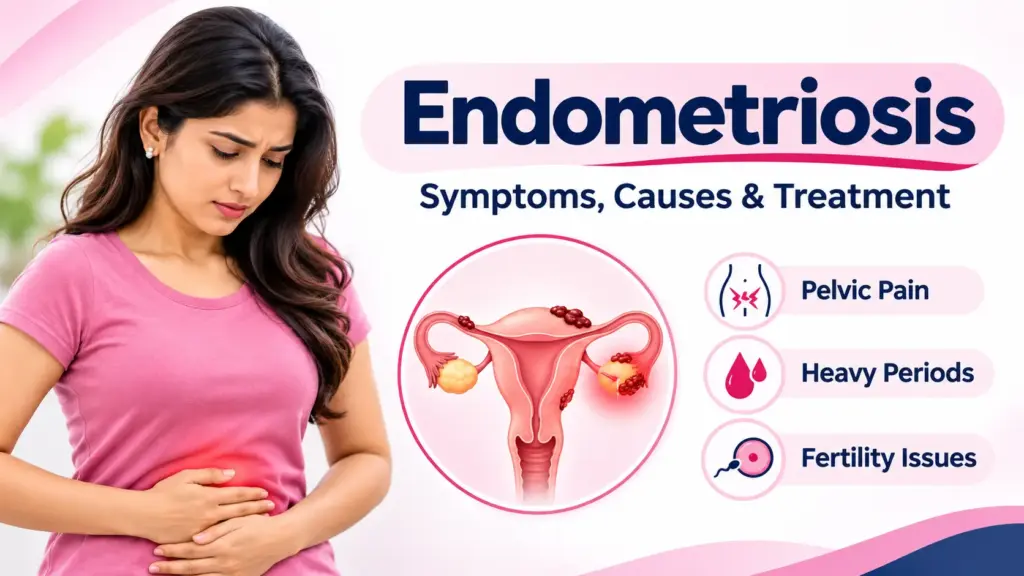
Period pain is common, but it shouldn’t be so severe that you regularly miss work, school or everyday activities.
Many women live with painful periods for years, believing that the discomfort is simply part of being a woman. However, severe menstrual pain can sometimes be a sign of an underlying condition called endometriosis.
Endometriosis can cause painful periods, ongoing lower abdominal pain and, in some cases, difficulty getting pregnant.
Understanding the symptoms and knowing when to seek medical help can make a real difference.
What Is Endometriosis?
Endometriosis is a long-term condition in which tissue similar to the lining of the uterus (womb) grows outside the uterus.
This tissue is most commonly found around the reproductive organs, including:
- The ovaries.
- The fallopian tubes.
- The outer surface of the uterus.
- The lining of the pelvis.
- The tissues around the bladder or bowel.
These growths can cause inflammation, irritation and scar tissue. Over time, this may lead to pain and sometimes fertility problems.
Endometriosis can affect women from their teenage years through adulthood. Some women have severe symptoms, while others may not notice any symptoms at all.
Common Symptoms of Endometriosis
Endometriosis affects everyone differently. The symptoms may become worse around the time of a menstrual period, although some women experience discomfort throughout the month.
Common symptoms include:
1. Severe Period Pain
Painful periods are one of the most common signs of endometriosis.
The pain may begin before menstruation and continue for several days. It can be much stronger than ordinary period cramps and may interfere with daily activities.
2. Lower Abdominal and Pelvic Pain
Some women experience ongoing pain in the lower abdomen, pelvis or lower back.
This discomfort may occur even when they are not having their period.
3. Pain During or After Sex
Endometriosis can cause pain during or after sexual intercourse, particularly when the condition affects deeper tissues in the pelvis.
4. Pain When Using the Toilet
Pain during bowel movements or urination can sometimes occur, especially during menstruation.
Some women also experience bloating, constipation or diarrhoea around their periods.
5. Heavy Menstrual Bleeding
Some women with endometriosis experience heavy periods or spotting between periods.
However, heavy menstrual bleeding can also be caused by other conditions.
6. Difficulty Getting Pregnant
Endometriosis can affect fertility in some women. Sometimes, it is discovered when a couple seeks medical advice about difficulty conceiving.
Important: The amount of pain you experience does not always reflect how extensive the endometriosis is. Some women with mild disease have severe pain, while others with more extensive disease have few symptoms.
What Causes Endometriosis?
The exact cause of endometriosis is still not fully understood.
Researchers believe several factors may contribute to its development.
These include:
- Genetics: Women with a close family member who has endometriosis may have a higher risk of developing it.
- Hormonal Factors: Estrogen plays an important role in the growth and activity of endometriosis tissue.
- Immune System Factors: Differences in how the immune system works may contribute to the condition.
- Retrograde Menstruation: One theory suggests that some menstrual fluid flows backwards through the fallopian tubes into the pelvis.
However, no single theory fully explains why endometriosis develops.
It is also important to understand that endometriosis is not caused by poor hygiene or anything a woman has done wrong.
How Is Endometriosis Diagnosed?
Endometriosis can be difficult to diagnose because its symptoms are similar to those of other conditions, including irritable bowel syndrome and some pelvic infections.
A doctor or gynaecologist may use several methods to investigate the symptoms.
Medical History and Examination
Your doctor will ask about your menstrual cycle, the location and severity of your pain, and whether the symptoms affect your daily life.
A physical or pelvic examination may also be recommended, depending on your symptoms.
Ultrasound Scan
An ultrasound scan can help identify ovarian cysts caused by endometriosis, known as endometriomas, and some other signs of the condition.
However, a normal ultrasound scan does not rule out endometriosis.
MRI Scan
In certain cases, an MRI scan may help doctors assess deeper endometriosis, particularly when the bowel or bladder may be affected.
Laparoscopy
Laparoscopy is a type of keyhole surgery that allows a doctor to examine the pelvic organs using a small camera.
It can help diagnose endometriosis and, in some cases, treat it during the same procedure.
However, surgery is not always necessary before starting treatment. A doctor may make a clinical diagnosis based on symptoms, examination findings and imaging results.
Can Endometriosis Affect Fertility?
Yes, endometriosis can make it harder for some women to become pregnant.
The condition may cause inflammation, scar tissue or changes around the ovaries and fallopian tubes, which can affect normal reproductive function.
However, having endometriosis does not automatically mean you are infertile.
Many women with endometriosis become pregnant naturally, while others may need fertility treatment.
If you have endometriosis and are planning to have a baby, speak to a gynaecologist about the best approach for your situation.
What Are the Treatment Options for Endometriosis?
There is currently no treatment that guarantees a permanent cure for endometriosis.
However, several treatments can help manage pain, improve quality of life and address fertility concerns.
The right treatment depends on your symptoms, the extent of the condition, your personal preferences and whether you are planning a pregnancy.
1. Pain Relief Medication
Doctors may recommend pain-relieving medicines, including anti-inflammatory medications such as ibuprofen, when suitable.
These can help reduce menstrual pain and discomfort.
However, they may not provide enough relief for everyone and are not appropriate for all patients.
2. Hormonal Treatments
Hormonal treatments can reduce menstrual bleeding and help manage endometriosis-related pain.
Common options include:
- Combined oral contraceptive pills.
- Progestogen-only tablets.
- Hormonal intrauterine devices (IUDs).
- Other hormone-suppressing medicines prescribed by a specialist.
Many hormonal treatments prevent pregnancy while they are being used, so they may not be suitable for women actively trying to conceive.
3. Laparoscopic Surgery
Surgery may be considered when symptoms are severe, other treatments have not worked or particular complications are present.
During laparoscopic surgery, a specialist may remove or destroy endometriosis tissue and treat certain ovarian cysts.
Surgery can improve symptoms for some women, but endometriosis may return afterwards.
4. Fertility Treatment
If endometriosis is affecting your ability to conceive, a fertility specialist can discuss possible treatments.
Depending on your situation, options may include surgery or assisted reproductive treatments such as in vitro fertilisation (IVF).
Treatment decisions should take your age, fertility history and personal circumstances into account.
Living With Endometriosis: Simple Ways to Manage Symptoms
Living with ongoing pelvic pain can be physically and emotionally exhausting.
Along with medical treatment, some simple habits may help you feel more comfortable.
Use Heat for Pain Relief
A warm heating pad or hot water bottle placed on the lower abdomen may help ease menstrual cramps.
Always protect your skin from excessive heat.
Stay Physically Active
Gentle exercise, such as walking, stretching or yoga, may help improve overall well-being.
Choose activities that feel comfortable and avoid pushing through severe pain.
Keep a Symptom Diary
Write down when your pain occurs, how severe it is and whether it affects your sleep, work or daily activities.
This information can help your doctor better understand your symptoms and treatment needs.
Look After Your Emotional Health
Chronic pain can affect your mood, relationships and mental health.
Talking to someone you trust, seeking counselling or joining a support group may help you cope.
Follow Your Treatment Plan
Take prescribed medication as directed and attend follow-up appointments when recommended.
Lifestyle changes may support your well-being, but they are not a replacement for medical treatment.
When Should You See a Doctor?
You should speak to a doctor or gynaecologist if:
- Your period pain regularly affects work, school or daily activities.
- You experience ongoing lower abdominal or pelvic pain.
- Sex is frequently painful.
- You have pain during bowel movements or urination, particularly during your period.
- You are having difficulty getting pregnant.
- Your symptoms are becoming worse over time.
Seek urgent medical care if you develop sudden, severe pelvic pain, especially with fainting, fever, heavy bleeding or a possible pregnancy. These symptoms can have causes other than endometriosis that need immediate assessment.
Frequently Asked Questions About Endometriosis
Is endometriosis the same as normal period pain?
No. While mild menstrual cramps are common, endometriosis can cause severe or persistent pain that interferes with everyday life. Not all painful periods are caused by endometriosis, so proper medical assessment is important.
Can endometriosis be cured permanently?
There is currently no guaranteed permanent cure. However, medicines, surgery and other supportive treatments can help manage symptoms effectively.
Can women with endometriosis get pregnant?
Yes. Many women with endometriosis can become pregnant naturally. Others may need fertility treatment, depending on how the condition affects their reproductive health.
Can endometriosis be diagnosed without surgery?
Yes. Doctors can sometimes make a clinical diagnosis using symptoms, examination findings and imaging tests. Laparoscopy may still be recommended in selected cases.
Does endometriosis get worse with age?
Not necessarily. Symptoms vary from person to person and may change over time. Some women improve with treatment or after menopause, while others continue to experience symptoms.
Final Thoughts
Severe period pain should never be something you feel you must simply endure.
Endometriosis is a common condition that can affect physical health, emotional well-being and fertility. Although it can take time to diagnose, effective treatment options are available.
If your menstrual pain is unusually severe or you experience ongoing pelvic discomfort, speak to a healthcare professional.
Getting the right advice and treatment can help you manage symptoms and improve your quality of life.
Medical Disclaimer: This article is for general educational purposes only. It does not replace professional medical advice, diagnosis or treatment. Always consult a qualified healthcare professional for personalised guidance.
Comments