
Have you ever experienced persistent itching around your anus? Does it become worse at night or leave you feeling uncomfortable throughout the day?
Anal itching is a common problem that can affect people of all ages. Although it may seem like a minor irritation, persistent itching can sometimes be a sign of an underlying medical condition.
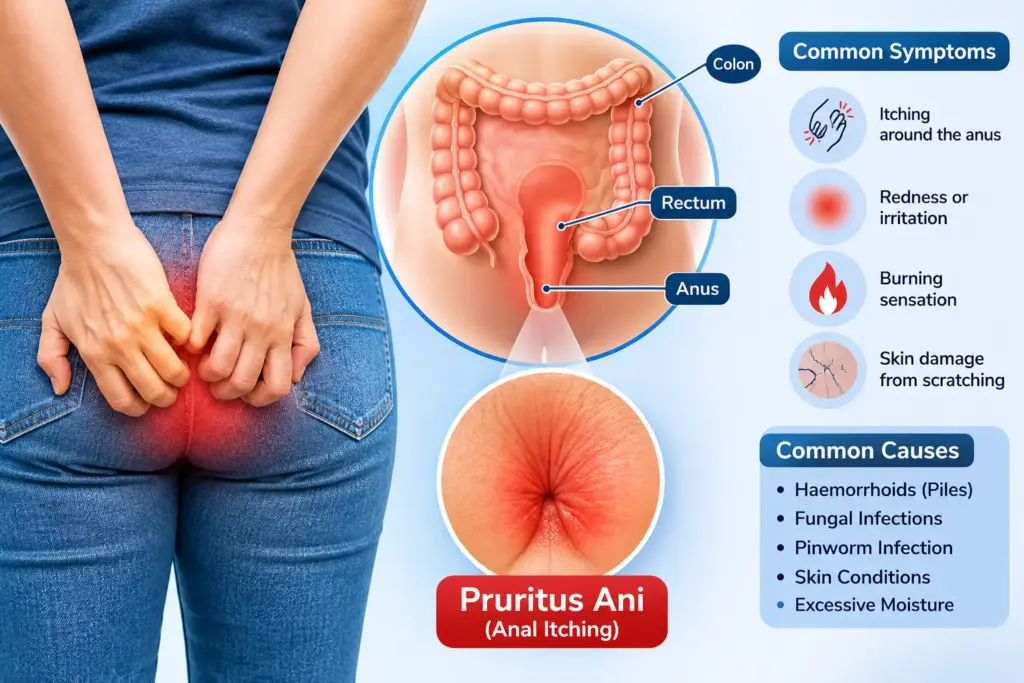
Medically, itching around the anus is known as Pruritus Ani. It can have several causes, ranging from simple skin irritation to infections and other medical conditions. Understanding the cause is important to finding the right treatment and preventing the itching from coming back.
What Is Pruritus Ani?
Pruritus Ani is the medical term for itching around the anus and the surrounding skin. It can be temporary or persistent and may range from mild irritation to intense itching that interferes with daily activities and sleep.
Some people experience itching mainly at night, while others notice it throughout the day. Repeated scratching can make the skin more irritated, leading to redness, soreness and even small cuts.
Common Causes of Anal Itching
There are several possible reasons why the skin around the anus becomes itchy. Some of the most common causes include:
- Haemorrhoids (Piles): Swollen veins around the anus can cause irritation, discomfort and itching.
- Anal Fissures: Small tears in the lining of the anus may lead to pain, irritation and itching.
- Fungal Infections: Fungal growth in warm, moist areas can cause redness and persistent itching.
- Pinworm Infection: Pinworms can cause intense itching around the anus, particularly at night. This is more common in children but can also affect adults.
- Skin Conditions: Eczema and contact dermatitis can irritate the sensitive skin around the anal area.
- Excessive Moisture and Sweating: Sweat and moisture trapped around the anus can contribute to skin irritation.
- Overcleaning: Using harsh soaps, scented products or excessive wiping can damage the skin’s natural protective barrier.
- Diabetes: People with diabetes may be more prone to certain infections, including fungal infections, which can contribute to itching.
Sometimes, anal itching occurs without an obvious underlying cause.
Symptoms of Pruritus Ani
The main symptom is itching around the anus, but other symptoms may develop depending on the cause.
Common symptoms include:
- Persistent or recurring itching around the anus.
- Itching that becomes worse at night.
- Redness or irritation of the surrounding skin.
- A burning sensation or discomfort.
- Skin damage caused by repeated scratching.
- Dry, thickened or cracked skin around the anus.
The severity of symptoms can vary from person to person.
How Is Pruritus Ani Diagnosed?
A doctor will usually begin by asking about your symptoms, medical history and personal hygiene habits.
The examination may include:
- Physical Examination: Checking the anal area for redness, swelling, skin changes, haemorrhoids or fissures.
- Fungal Tests: A skin sample may be collected if a fungal infection is suspected.
- Tape Test: If pinworm infection is suspected, a tape test may be recommended to detect pinworm eggs around the anus.
- Additional Tests: Further investigations may be needed if the symptoms suggest another underlying condition.
Not everyone needs all these tests. The doctor will decide which investigations are appropriate based on the symptoms and examination findings.
Treatment for Pruritus Ani
Treatment depends on what is causing the itching. Simply treating the itching without addressing the underlying cause may not provide lasting relief.
Depending on the diagnosis, treatment may include:
- Antifungal Medication: Used when a fungal infection is responsible for the itching.
- Antiparasitic Medication: Prescribed to treat pinworm infections.
- Skin Treatments: Appropriate creams or ointments may help reduce inflammation and irritation caused by certain skin conditions.
- Treatment for Haemorrhoids or Anal Fissures: Managing these conditions can help relieve associated itching and discomfort.
It is important to use the correct medication for the underlying cause. Avoid using steroid creams or other medicated products around the anus without medical advice, as inappropriate use may worsen certain infections or irritate sensitive skin.
How to Relieve Anal Itching at Home
A few simple changes to your daily hygiene routine can help reduce irritation and prevent symptoms from getting worse.
Here are some practical tips:
- Clean Gently: After passing stools, wash the area with lukewarm water rather than using harsh soaps.
- Keep the Area Dry: Gently pat the skin dry with a soft towel. Avoid rubbing.
- Avoid Scented Products: Perfumed soaps, wet wipes and other fragranced products may irritate sensitive skin.
- Wear Cotton Underwear: Breathable cotton underwear can help reduce moisture and sweating.
- Avoid Scratching: Scratching can damage the skin and make the itching worse.
- Avoid Excessive Cleaning: Frequent washing and vigorous wiping can increase irritation.
- Avoid Self-Medicating: Do not use steroid or antifungal creams without knowing the cause of the itching.
If the symptoms continue despite these measures, consult a healthcare professional.
When Should You See a Doctor?
Occasional itching may improve with simple hygiene changes. However, persistent or severe symptoms should not be ignored.
Seek medical advice if:
- The itching does not improve or keeps coming back.
- You notice blood during or after bowel movements.
- Sores, lumps or unusual changes develop around the anus.
- You notice pus or unusual discharge.
- You experience severe pain or swelling.
- The skin becomes increasingly inflamed or damaged.
Severe anal pain, swelling, fever or pus may indicate an infection that needs prompt medical attention.
Final Thoughts
Pruritus Ani, or anal itching, is a common condition that can be caused by several different factors. Although it may feel uncomfortable or embarrassing to talk about, it is nothing to be ashamed of.
The most important step is to identify the underlying cause rather than simply trying to stop the itching. With proper diagnosis, appropriate treatment and a few changes to your daily hygiene habits, most cases can be managed effectively.
Take care of your health, and don’t hesitate to seek medical advice when something doesn’t feel right.
Medical Disclaimer: This article is intended for general educational purposes only. It should not replace professional medical advice, diagnosis or treatment.
Comments